 Skip to the content

Key Takeaways
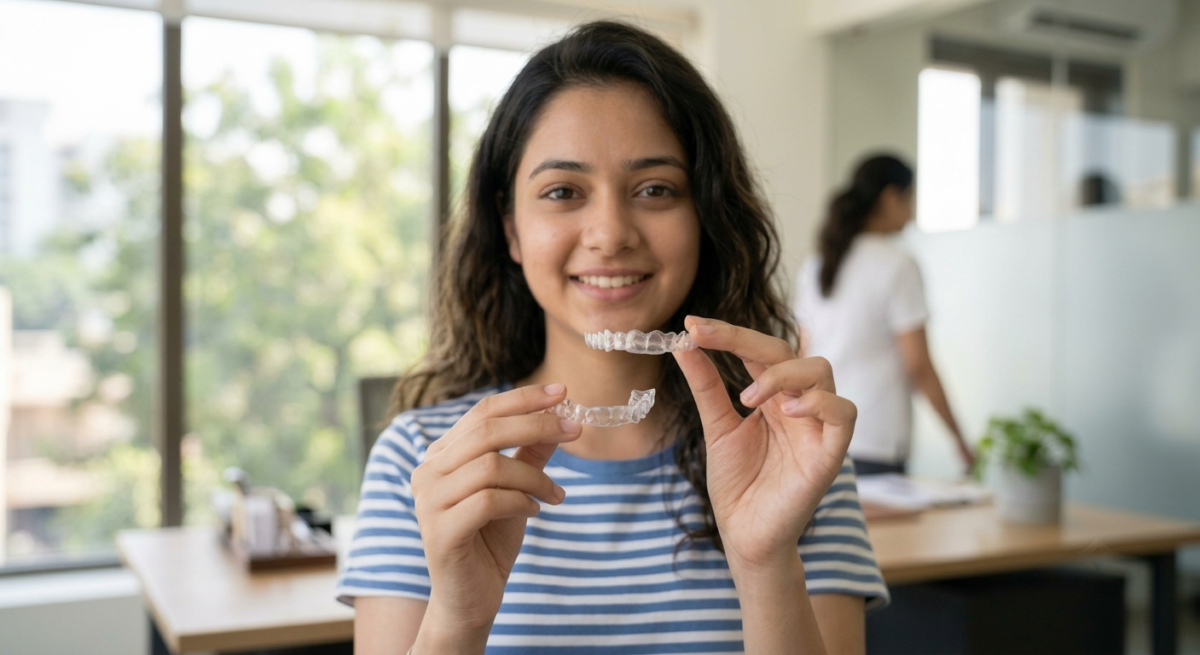
- Clear aligners can be a great option for teenagers, usually from around age 14 to 18, when the case suits.
- Because aligners depend on daily discipline, we assess each teenager carefully before starting.
- Parental involvement matters: supporting the wear routine is a big part of why treatment succeeds.
- Younger children, generally under 15, are often better suited to conventional braces.
- Teens get the same nearly invisible, removable advantages that adults value.
- Dr. Rupali Panpate gives an honest view on whether aligners or braces fit your child.
If your teenager wants straighter teeth, clear aligners are an appealing option, and often the right one. They are discreet, comfortable and removable, which suits teenage life well. The key is knowing when a teen is ready for them, and that is where an honest assessment comes in.
Are aligners right for a teenager?
For many teenagers, yes. From around age 14 to 18, when the teeth and jaw are developed enough and the case is suitable, aligners can treat the same spacing, crowding and bite issues they treat in adults.
The appeal for teens is obvious. The trays are nearly invisible, so there is far less self-consciousness than with metal braces, and they come out for sports, music and special occasions. You can read how the treatment itself works in our guide to the clear aligner journey.
Why discipline is the deciding factor
Here is the honest part. Aligners only work when they are worn 20 to 22 hours a day, and that level of consistency is a lot to ask of a busy teenager. This is exactly why we assess each teen individually before recommending aligners.
It is not about doubting your child. It is about setting them up to succeed, because an aligner left in a bag all day simply will not move teeth. If the routine looks manageable, aligners are a strong choice. Many teenagers surprise their parents here, becoming genuinely consistent once they start seeing their own progress between trays.
The parent’s role in a successful outcome

Parents make a real difference, without needing to police every hour. Gentle encouragement to keep the trays in, help remembering review appointments, and a bit of support with the cleaning and case habits all add up.
When a teenager and parent approach treatment as a team, outcomes are consistently better. We will tell you exactly what to keep an eye on, so you can support without hovering.
When braces are the better choice
Sometimes braces are simply the right answer, particularly for younger children. Below around 15, the daily discipline aligners need is harder to sustain and the jaws are still developing, so fixed braces that work around the clock are often more reliable.
Certain complex or developmental cases also respond better to braces at any age. If that is true for your child, we will say so plainly rather than stretch aligners to fit. Our guide on who is a candidate for clear aligners explains these lines in more detail.
What treatment looks like for a teen
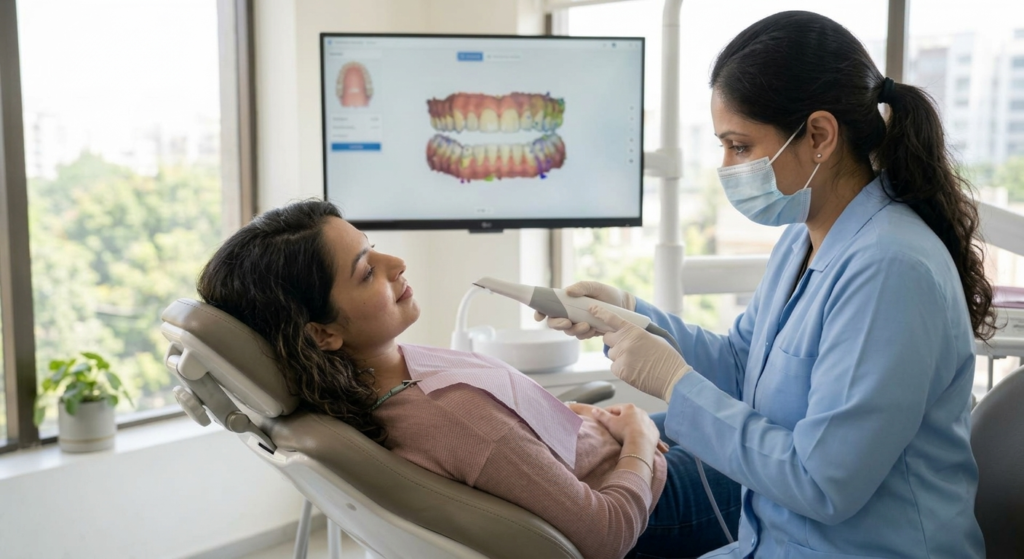
It starts the same way as for adults: a full assessment with photographs, an OPG X-ray, a lateral cephalogram and a comfortable TRIOS 3 digital scan, followed by a simulation of the expected result. From there your teen wears a numbered series of trays, with regular reviews to keep everything on track. For most teenage cases, treatment runs from a few months to around nine, depending on how much movement is needed, with a new tray roughly every week or two.
Dr. Rupali Panpate plans and personally supervises each case, so your child is looked after from the first scan to the final retainer.
Book your teen’s assessment
The best next step is a proper assessment, where you will get a clear, honest answer on whether aligners or braces suit your child and what the treatment involves. There is no pressure, and no decision is made until you and your teen are comfortable with the plan.
Call 097390 62002 to book at Dr Rupali’s Dental Care and Implant Centre, Kasturi Nagar, Bengaluru, or read more about aligner treatment at our clinic.
Frequently Asked Questions
What age can a teenager start clear aligners?
Teenagers are usually treated from around age fourteen to eighteen, assessed case by case. The decision looks at how developed the teeth and jaw are and whether the teenager can realistically manage the daily wear routine. Children under fifteen are often better suited to conventional braces.
Will my teenager actually wear them?
That is the key question, and it is exactly why we assess discipline before starting. Aligners only work when worn twenty to twenty-two hours a day, so we talk honestly with both teen and parent about the routine, and parental support makes a real difference to the outcome.
Are aligners better than braces for teens?
Neither is simply better; they suit different teens. Aligners are nearly invisible and removable, which many teenagers prefer, but braces may be the right choice for younger children or for cases that need constant, fixed force. The assessment decides which fits your child’s case.
How involved do parents need to be?
Supportively involved. You do not need to police every hour, but encouraging the daily wear routine, keeping review appointments and helping with the case and cleaning habits all help treatment stay on track. We guide you on exactly what to watch for throughout.