Guides and advice on teeth straightening at Dr Rupali’s Dental Care & Implant Centre in Kasturi Nagar, Bengaluru – clear aligners, conventional braces, costs, and how treatment works. Aligner treatment is planned and personally supervised by Dr. Rupali Wankhede Panpate. For treatment details, see our Clear Aligners page: https://drrupalidentalcare.com/services/clear-aligners/
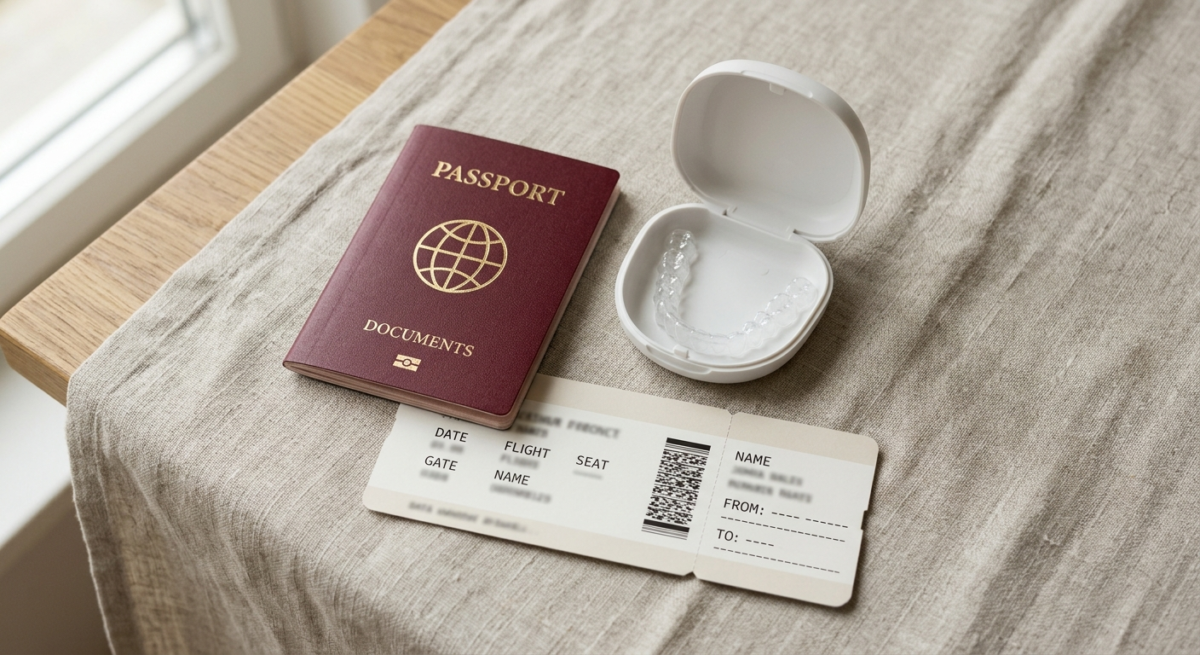
A passport, boarding pass, and clear aligners in a protective case illustrating dental tourism for NRI patients.
Key Takeaways
Clear aligner treatment can be managed for patients living abroad.
The clinical work is front-loaded into a single visit to India: evaluation, scan, and the full tray series.
Progress is followed through scheduled check-in calls and monthly photo reviews.
A local dentist can handle anything hands-on, while the overall plan stays with our clinic.
Retainers are usually completed on a later visit to India.
The clinic has managed cases for patients in the United States and Australia, planned by Dr. Rupali Panpate.
Living overseas does not mean putting off the smile you have been meaning to fix. Clear aligner treatment can be managed for patients based abroad, and Dr. Rupali Panpate oversees the whole plan from start to finish. Treatment stays with one doctor even as you move between countries.
Why aligners suit treatment from abroad
Clear aligners lend themselves to remote treatment better than almost any other orthodontic option. The entire series of trays can be produced in advance from a single digital scan, so where fixed braces need a chair visit for every wire adjustment, an aligner patient can carry their planned trays overseas.
The clinic has managed cases this way for patients in the United States and Australia, among others. The one thing that makes or breaks it is careful front-loading: getting the records, the plan, and the hardware exactly right during your time in India. If you are new to aligners, our guide to how clear aligners work covers the fundamentals.
Your visit to India
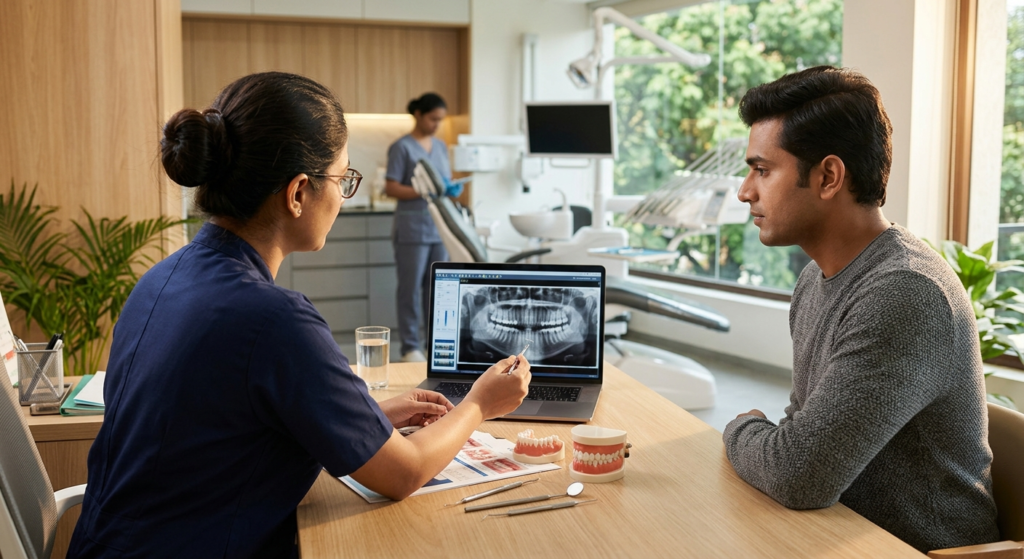
A dentist reviewing dental X-rays on a laptop during an initial clear aligner consultation with a patient.
The main visit is where the clinical work is concentrated. Dr. Rupali Panpate, an Invisalign approved doctor who plans every case personally, carries out a full evaluation: photographs, an OPG X-ray, a lateral cephalogram, and a TRIOS 3 digital scan.
Any attachments, the small tooth-coloured shapes that help certain movements along, are placed during this visit, and your numbered series of trays is prepared. The scan and complete evaluation cost Rs 3,500 to 4,000, adjusted against your treatment cost if you proceed. Wherever possible the visit is planned so that you leave with your trays in hand and a clear schedule to follow.
Staying on track from abroad
A patient attending a virtual dental consultation and remote review call from home on a laptop.
Once you are back home, treatment continues under supervision, just remotely. The clinic makes ten-day check-in calls as you start new trays, and holds monthly reviews where you share photographs so your progress can be compared against the plan.
If something needs a hands-on check, such as a loose attachment, a local dentist near you can help with that specific task while the overall plan stays with our clinic. This shared arrangement is what keeps remote treatment safe rather than a guessing game. Communication tends to be easy too, with the team comfortable in English, Hindi, Kannada, Tamil, Telugu, and Malayalam.
Finishing treatment and retainers
As you near the end of your tray series, the result is reviewed against the original plan, and any minor refinements are addressed under the clinic’s refinement policy. Retainers, which are a mandatory final stage for every case, are usually fitted on a return visit so that the settling of your teeth is properly supervised.
Planning this last step in advance, often around a trip home, means your treatment finishes cleanly instead of being left open-ended. You can read more about that final stage in our guide to retainers after aligners.
Why NRI patients choose our clinic
Distance makes trust matter more, not less. NRI patients choose the clinic because Dr. Rupali Panpate plans and manages every case herself rather than handing it to a rotating team, and because treatment runs on established systems in Invisalign and DentCare.
The clinic also has genuine experience managing cases across time zones. Aligner treatment here typically completes in two to nine months, which often fits neatly around planned visits to India. You get the quality and cost of treatment in Bengaluru with a plan built around your life abroad.
Plan your treatment from abroad
If you are visiting India soon, or even just thinking about a trip, it is worth starting the conversation early so your visit can be used well. Call or message 097390 62002 to reach Dr Rupali’s Dental Care and Implant Centre, Kasturi Nagar, Bengaluru, and the team will help you map treatment around your travel.
Can I really do aligner treatment while living abroad?
Yes. Because the full series of trays is made in advance from one digital scan, the clinical work is concentrated into a single visit to India, and the rest is followed through check-in calls and monthly photo reviews. A local dentist can assist with anything hands-on.
How many times do I need to visit India?
Most treatment is front-loaded into one main visit where records are taken and your trays are prepared, with a later visit usually planned for retainers. The exact number of visits depends on your case and is confirmed after your evaluation with the doctor.
What if I need an adjustment while I am abroad?
The ten-day check-in calls and monthly photo reviews are designed to catch issues early before they become problems. If something needs hands-on attention, such as a loose attachment, a local dentist can help with that task while your overall plan stays with our clinic.
Which countries have your NRI patients come from?
The clinic has managed clear aligner cases for patients living in the United States and Australia, among other countries. Treatment is planned carefully around your location and your travel schedule so that your visits to India are used efficiently.
A dentist reviewing dental X-rays on a tablet during a consultation with a family in a modern dental clinic.
Finding the best dental clinic in Kasturi Nagar Bangalore is less about choosing the clinic with the loudest claim and more about matching the clinic to your treatment needs, comfort level, schedule, and long term oral health goals. A family needing routine checkups has different priorities from a person with severe tooth pain, a missing tooth, or a complex implant plan.
For many patients, the right choice is a nearby multispeciality clinic that can begin with a careful diagnosis and continue treatment without sending them from one location to another. In Kasturi Nagar, that often means looking beyond ratings alone and checking services, clinician involvement, hygiene practices, transparent estimates, and follow up support.
The best clinic is not automatically the one with the highest star rating or the lowest consultation fee. I would treat “best” as a practical fit: a clinic should have the right clinical scope, clear communication, safe processes, convenient access, and a plan for follow up care.
A family clinic should make preventive visits easy for children, parents, and older adults. A cosmetic focused clinic should explain appearance related options without overlooking gum health or bite function. An implant patient needs a more detailed assessment, especially when bone, gums, old crowns, or several missing teeth are involved.
Choose A Clinic That Matches The Treatment, Not Just The Label
A multispeciality dental clinic can be helpful because many dental problems overlap. A cracked tooth may need diagnostic imaging, root canal treatment, a crown, and bite adjustment. A missing tooth may need gum treatment before a bridge, denture, or implant can be considered.
For patients seeking broad family and restorative treatment, Dr. Rupali’s Dental Care in Kasturi Nagar presents a local option focused on comprehensive dental and implant care. The clinic describes services for children, adults, and seniors, including preventive care, restorative dentistry, cosmetic treatment, orthodontics, periodontal care, dentures, bridges, and reconstructive treatment.
Here is a useful way to match the problem with the expected level of care:
Dental Need
What A Suitable Clinic Should Discuss
When Specialist Input Matters Most
Routine checkup or cleaning
Decay risk, gum condition, cleaning needs, home care
Persistent gum bleeding or advanced gum disease
Tooth pain
Cause of pain, X rays if needed, immediate relief, next steps
Deep infection, root canal needs, facial swelling
Missing tooth
Bridge, denture, implant, bite and gum assessment
Multiple missing teeth, low bone volume, complex implant planning
Braces or aligners
Bite, crowding, treatment duration, retention plan
Extensive wear, old restorations, or bite concerns
Fair warning: a clinic can offer many services and still be unsuitable for a particular case if it does not explain who will manage complex treatment. Ask directly whether a general dentist, orthodontist, endodontist, periodontist, oral surgeon, or implant focused clinician will be involved when needed.
Convenience Matters, Especially For Families
Kasturi Nagar residents often balance school schedules, work hours, traffic, and care for older relatives. A clinic close to home can make preventive care and follow ups easier to maintain. That matters because treatment such as root canals, aligners, implants, and gum therapy often requires more than one visit.
Local directory pages can help build an initial shortlist. For example, Lybrate’s Kasturi Nagar clinic listings organize names, fees, ratings, and contact details, making them useful for a first comparison. They are less useful for judging clinical quality on their own.
A nearby clinic is usually the better choice when it offers the right service and has reliable follow up. However, traveling farther may be reasonable for a highly complex rehabilitation, difficult surgical case, or treatment requiring a particular specialist. The tradeoff is simple: convenience supports attendance, while specialist expertise may be more important when clinical risk is higher.
Dental Care Options For Every Age
A strong local clinic should support oral health from routine prevention through advanced restoration. The most useful starting point is a consultation that identifies what is urgent, what can wait, and what could prevent a larger problem later.
Preventive And Family Dental Care
Preventive care includes dental examinations, professional cleaning, cavity assessment, gum evaluation, fluoride advice where appropriate, and practical guidance on brushing and diet. For children, this may also include monitoring tooth eruption, bite development, and habits that affect teeth or jaws.
Prevention is often the least dramatic form of dental care, but it can prevent difficult treatment. Consider a small cavity found during a checkup. Treating it early may require a simple filling. Leaving it untreated can allow decay to reach the pulp, turning a short restoration into root canal treatment and a crown.
For family appointments, ask whether the clinic can schedule related visits close together. This can reduce repeated travel while still allowing each person enough examination time.
Restorative And Root Canal Treatment
Restorative dentistry repairs damaged or missing tooth structure. It can include fillings, crowns, bridges, dentures, root canal treatment, and replacement options for teeth that cannot be saved.
Root canal treatment is generally considered when infection or inflammation affects the tooth pulp. A good consultation should explain whether the tooth is restorable, what the X ray indicates, whether a crown may be needed afterward, and what may happen if treatment is delayed. It should not be presented as a one size fits all answer to any toothache.
For a clear overview of treatments that may be relevant to preventive, restorative, cosmetic, and advanced needs, review the Dental services offered before your appointment. Use that information as a conversation starter, not as a substitute for an examination.
Cosmetic Dentistry And Orthodontics
Cosmetic dentistry may include whitening, tooth colored restorations, veneers, bonding, and smile correction. The best option depends on why the smile looks uneven, dark, worn, or chipped. Whitening can change tooth color, but it will not change the shade of an old crown. Bonding may improve a small chip, but it may not be the right answer for a heavily worn bite.
Orthodontic treatment uses braces or clear aligners to correct tooth position and certain bite problems. Before choosing braces or aligners, ask how the clinic will assess bite relationships, gum health, oral hygiene, expected treatment time, and retention after active treatment ends. Teeth can shift after orthodontic care, which is why retainers and review visits matter.
A cosmetic plan should also be conservative when possible. Healthy enamel is valuable. If a patient only has mild spacing, slight unevenness, or surface stains, less invasive options may be worth discussing before irreversible treatment.
Implants, Bridges, And Dentures
Dental implants, bridges, and dentures can all replace missing teeth, but they work differently. An implant replaces a tooth root with a surgically placed fixture and usually supports a crown after healing. A bridge generally uses nearby teeth for support. A denture is removable and may replace one tooth, several teeth, or a full arch.
Implants are not automatically best for every patient. Bone quality, gum health, smoking status, medical history, bite forces, oral hygiene, budget, and ability to attend review visits can all affect suitability. A careful implant plan may involve scans, treatment of gum disease, extraction healing, bone grafting, or temporary tooth replacement before the final restoration.
A trustworthy treatment discussion makes room for alternatives. If the only option presented is the most expensive one, pause and ask what other clinically appropriate options exist.
How To Compare Clinics Safely And Fairly
Comparing clinics becomes easier when you separate public signals from clinical evidence. Reviews can show how people felt about communication, punctuality, comfort, and staff behavior. They cannot confirm whether a particular procedure is right for your mouth.
Use Reviews, Fees, And Listings With Context
Practo’s local directory displays fields such as ratings, reviews, doctors, fee range, location, and year established on its Kasturi Nagar dental clinic results. These fields are helpful for comparing access and reputation signals, but they should lead to questions rather than serve as a final verdict.
Look for patterns in reviews instead of focusing on one very positive or negative comment. Repeated mentions of clear explanations, gentle care, clean surroundings, timely follow ups, or unresolved billing concerns can be more useful than a star score alone.
Public price ranges need the same care. Justdial’s Kasturi Nagar dentist page lists a dental checkup price range of ₹500 to ₹2000. That figure is a local reference point, not a complete treatment quote.
Ask for an itemized estimate when treatment is recommended. For example, an implant quote may or may not include scans, extraction, grafting, the implant fixture, abutment, final crown, medicines, and review visits. A root canal estimate may or may not include X rays, temporary restoration, final crown, or treatment of an additional canal.
Check Traceability And Hygiene Before Booking
A clinic should be easy to identify and contact. Confirm the clinic name, physical address, clinician name, appointment channel, and current hours before you leave home. If you are uncertain about a practitioner’s qualifications or registration, ask the clinic directly for the dentist’s registration details and independently check the relevant official dental council records where available.
You can also observe simple infection control signals during a visit. No patient can audit sterilization systems from the waiting room, but reasonable questions and visible cues matter:
• Are instruments opened from sealed sterilization pouches when appropriate?
• Are gloves changed between patients and are single use items disposed of correctly?
• Are treatment surfaces cleaned between patients?
• Does the team explain protective measures without becoming defensive?
• Is medical history reviewed before invasive treatment?
Clean looking interiors are not proof of safe clinical systems. On the other hand, a clinic that can calmly explain its sterilization process and patient safety steps gives you a more useful basis for trust.
Ask Questions That Prevent Billing And Treatment Surprises
Before agreeing to treatment, I recommend asking for a simple written plan. It does not need to be complicated. It should state the diagnosis, options, expected number of visits, estimated costs, major limitations, and what happens if the clinical finding changes after treatment begins.
Use this short appointment checklist:
What is causing the problem, and what evidence supports that diagnosis?
What are the conservative options before more extensive treatment?
Which parts of the estimate are included, and which may add cost?
Who will perform each stage of treatment?
What follow up care is included after a root canal, extraction, implant, or orthodontic plan?
Who should be contacted if pain, swelling, a broken temporary restoration, or another issue occurs after the visit?
For a closer view of patient feedback, Patient reviews and testimonials can provide an additional reputation signal. Read them alongside your consultation experience, because a direct explanation of your own treatment plan remains essential.
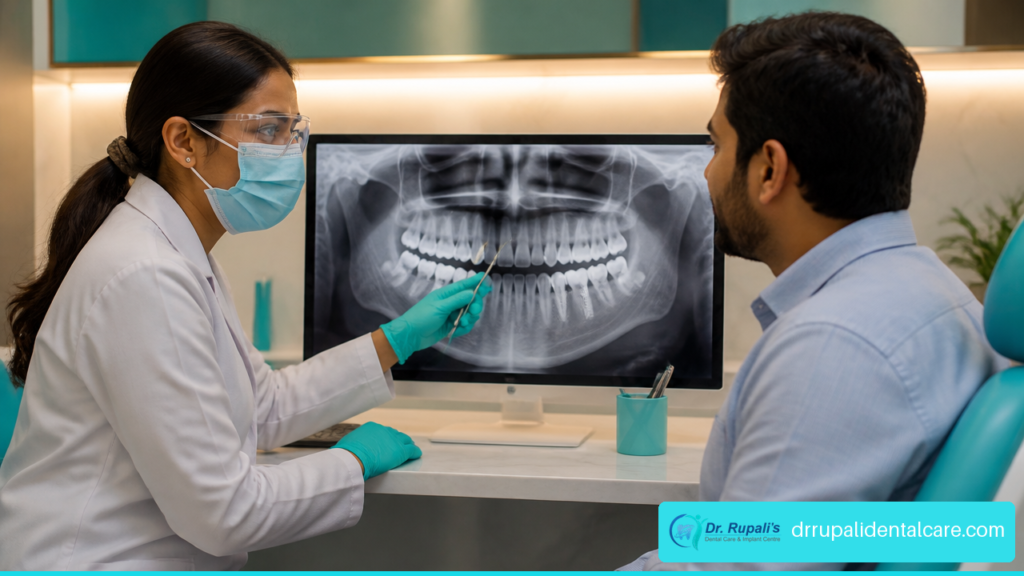
A dentist explaining a digital OPG panoramic X-ray to a patient on a desktop monitor during a consultation.
Choosing Care For Urgent And Complex Problems
Urgent dental problems change the decision process. When pain is severe, the best clinic may be the one that can assess you promptly, provide appropriate pain or infection management, and arrange timely treatment or referral.
When Same Day Access Matters More Than Ratings
For a broken filling without pain, you may have time to compare clinics carefully. For facial swelling, uncontrolled bleeding, a knocked out permanent tooth, difficulty swallowing, trouble breathing, or trauma to the jaw, speed and the correct escalation pathway matter far more than reviews.
Some emergencies may need hospital based care rather than routine treatment in a clinic. A responsible dental clinic should recognize when swelling is spreading, breathing is affected, bleeding will not stop, or trauma requires urgent medical or surgical support. In those situations, seek emergency medical help immediately rather than waiting for a standard appointment slot.
Operating hours can affect urgent access. Apollo Dental’s Kasturi Nagar page lists Monday through Saturday hours from 9:00 AM to 8:30 PM and Sunday hours from 10:00 AM to 4:00 PM, alongside address and contact information on its Kasturi Nagar clinic information page. Always verify current hours before visiting, since schedules can change.
Confirm Access Before You Travel
Address and contact details can vary between directory pages and clinic websites, so verify them directly. Dezy’s local page provides an East of NGEF Layout address, phone and WhatsApp contact, and listed hours of 11 AM to 8 PM on its Kasturi Nagar clinic contact listing.
When calling for urgent care, be specific. Say whether there is swelling, fever, injury, severe pain, bleeding, a loose tooth, or difficulty eating. Ask whether the clinic can see you the same day, what you should bring, and whether the situation needs a different level of care.
Plan For Aftercare Before Treatment Begins
Good aftercare is part of treatment quality. After an extraction, you should know what bleeding, swelling, and discomfort can be expected and when to call. After root canal treatment, you should understand whether a crown is recommended and how long the temporary restoration is expected to last. After implant surgery, you need clear cleaning instructions, diet guidance, review timing, and a contact route for concerns.
The same principle applies to aligners and braces. Ask how often progress is checked, what happens if an attachment comes off, whether refinements may be needed, and how retention will be managed after alignment.
Key Takeaways
• The best dental clinic in Kasturi Nagar Bangalore is the one that matches your treatment needs, explains options clearly, and provides dependable follow up.
• Family patients should prioritize preventive care, convenient appointment access, and a clinic that can manage needs across age groups.
• Root canal treatment, implants, braces, and complex gum problems may require specialist involvement or a multidisciplinary treatment plan.
• Ratings and reviews are useful starting points, but patterns in communication, hygiene, transparency, and aftercare deserve equal attention.
• Compare written estimates line by line. Starting prices may not include imaging, final crowns, temporary restorations, grafting, or review care.
• Severe swelling, breathing difficulty, uncontrolled bleeding, major trauma, or trouble swallowing requires urgent medical evaluation rather than a routine dental appointment.
Frequently Asked Questions
Which Is The Best Dental Clinic In Kasturi Nagar Bangalore For Family Treatment?
The best family clinic should offer routine examinations, cleaning, fillings, gum care, children’s dental support, restorative options, and clear referrals or specialist access when treatment becomes complex. Choose a clinic that can coordinate care for different age groups and make follow up appointments practical for your household.
Which Clinic Is Best For Root Canal Treatment In Kasturi Nagar?
Choose a clinic that explains the cause of pain, uses appropriate diagnostic imaging, discusses whether the tooth can be saved, and outlines restoration after treatment. For difficult canals, repeat root canal treatment, or significant infection, ask whether an endodontic specialist will be involved.
Which Dental Clinic Is Best For Implants?
The right implant clinic should assess bone, gums, bite, medical factors, and replacement alternatives before promising a result. Ask for a stage by stage plan and written estimate. An implant may be an excellent option, but bridges or dentures can be more suitable in some situations.
How Do I Compare Dental Clinics By Ratings And Fees?
Use ratings and review patterns to shortlist clinics, then compare clinician availability, treatment scope, hygiene practices, appointment timing, and written estimates. A low starting fee is not automatically lower cost if essential items are excluded from the quote.
How Can I Tell If A Dental Clinic Is Hygienic And Safe?
Look for visible cleaning between patients, appropriate use of gloves and disposable items, sealed instrument packs where relevant, medical history review, and staff who can answer questions about sterilization. If you feel rushed or your safety questions are dismissed, consider another clinic.
Which Clinics In Kasturi Nagar Are Open On Sundays?
Sunday schedules vary by clinic and can change. Check the clinic’s current official contact channel before visiting. Weekend hours are especially important if you have pain or cannot attend during workdays, but availability should be confirmed before travel.
What Should I Ask Before An Extraction Or Implant?
Ask why the tooth needs extraction, whether it can be saved, what replacement choices are available, what imaging is needed, which costs are included, and what aftercare is expected. Also ask who to contact if bleeding, swelling, severe pain, or a damaged temporary tooth occurs after the procedure.
A set of clear aligners in a protective case placed alongside a calculator and budget notebook for dental treatment planning.
Quick Answer
Clear aligner treatment in Bangalore ranges from about Rs 30,000 to Rs 3.5 lakh depending on the system and how complex the case is. At Dr Rupali’s Dental Care and Implant Centre in Kasturi Nagar, DentCare aligner treatment generally ranges from Rs 30,000 to Rs 1.5 lakh or more, Invisalign is priced after assessment, and no-cost EMI is available. The scan and evaluation costs Rs 3,500 to 4,000 and is adjusted against your treatment cost if you proceed.
What Decides the Cost of Aligners?
Every aligner quote comes down to four things: how far your teeth need to move, how many trays that takes, which aligner system you choose, and what is bundled into the price. A small gap that closes in a handful of trays costs a fraction of a full correction that runs through twenty or more. That is why serious clinics quote after a scan, not over the phone: the number of trays is the price, and nobody knows it until your case is planned.
What Aligners Cost Across Bangalore
Market ranges you will see across the city in 2026: All figures vary with the clinic and the case. Treat every range here as a starting point, not a quote.
Option
Typical Bangalore range
What that buys
Online / mail order aligner services
Rs 30,000 – 90,000
Trays without in-person examination or monitoring
Indian in-clinic aligner brands
Rs 30,000 – 1.5 lakh+
Doctor-supervised treatment on locally made systems
Invisalign
Rs 1 lakh – 3.5 lakh+
The premium international system, tiered by case complexity
Conventional braces
Rs 40,000 – 90,000
Fixed treatment; often cheaper for smaller corrections
A dental professional discussing clear aligner and treatment options during a patient consultation.
What Aligners Cost at Our Clinic
Item
Cost
Notes
DentCare aligner treatment
Rs 30,000 – 1.5 lakh+
Case dependent; exact plan and price after your scan
Invisalign treatment
Priced after assessment
Premium international system
Scan + complete evaluation
Rs 3,500 – 4,000
Adjusted against treatment cost if you proceed
Review visits during treatment
Free
Included in your treatment fee, however many you need
Refinement trays
First year: no cost or minimal cost
Our first year refinement policy; minimal charges after
How EMI Works
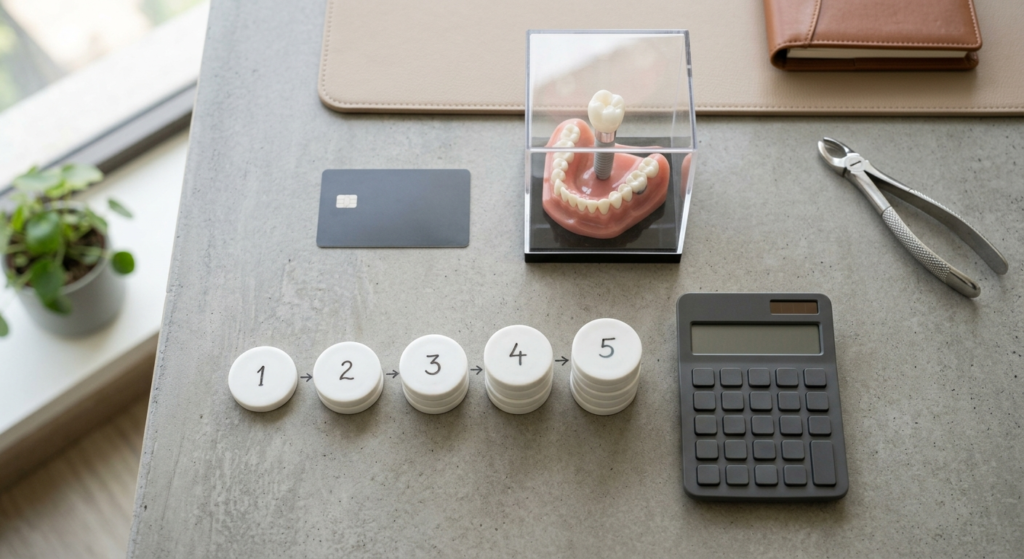
caption-Stacked coins numbered 1 to 5, a credit card, calculator, and dental model illustrating flexible EMI installment payment plans.
Most of our aligner patients pay through EMI, and we keep it simple: 50 to 60 percent of the treatment cost upfront, and the balance in monthly installments, with no-cost EMI available. If a single payment has been holding you back, it does not have to.
Why the Cheapest Quote Is the Wrong Filter
The lowest prices in the aligner market belong to services that skip examination, X-rays and in-person monitoring. Teeth move through living bone, and treatment without diagnosis can cost far more to correct than it saved. Compare what is included, not just the number: who examines you, who monitors progress, what happens if a tooth stops tracking, and whether reviews and refinements are covered. We have written an honest comparison here: in-clinic versus at-home aligners.
Get Your Exact Number
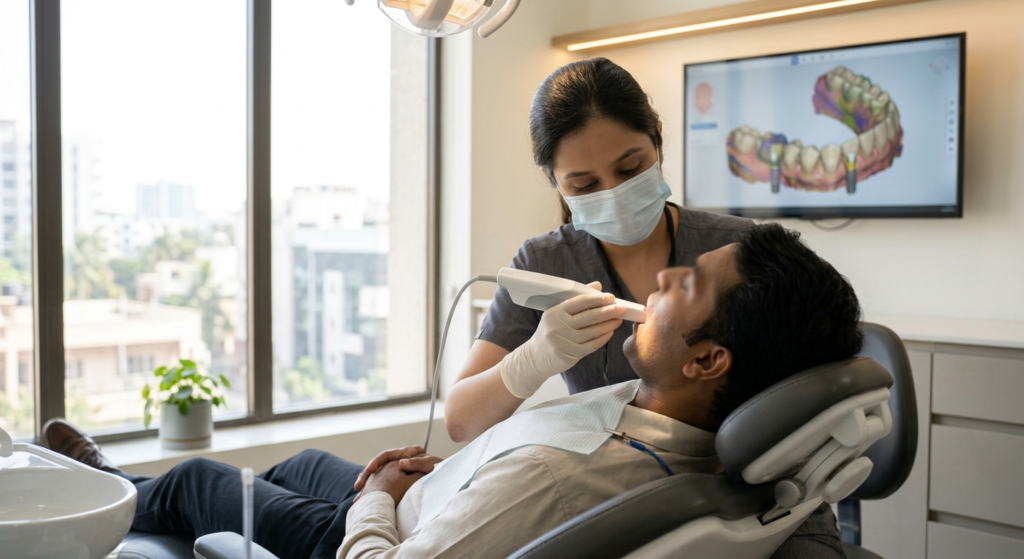
A dentist using an intraoral scanner to perform a 3D digital scan of a patient’s teeth for clear aligners.
One visit answers everything: a clinical exam, X-rays, a TRIOS 3 digital scan, a simulation video of your result, the exact number of trays, the total price and the EMI plan. The Rs 3,500 to 4,000 evaluation fee is adjusted against your treatment if you go ahead.
Call 097390 62002 – Dr Rupali’s Dental Care and Implant Centre, Kasturi Nagar, Bengaluru. Aligner treatment is planned and personally supervised by Dr. Rupali Wankhede Panpate, an Invisalign approved dentist with more than 110 aligner cases over 12 years. You can also read about aligner treatment at our clinic.
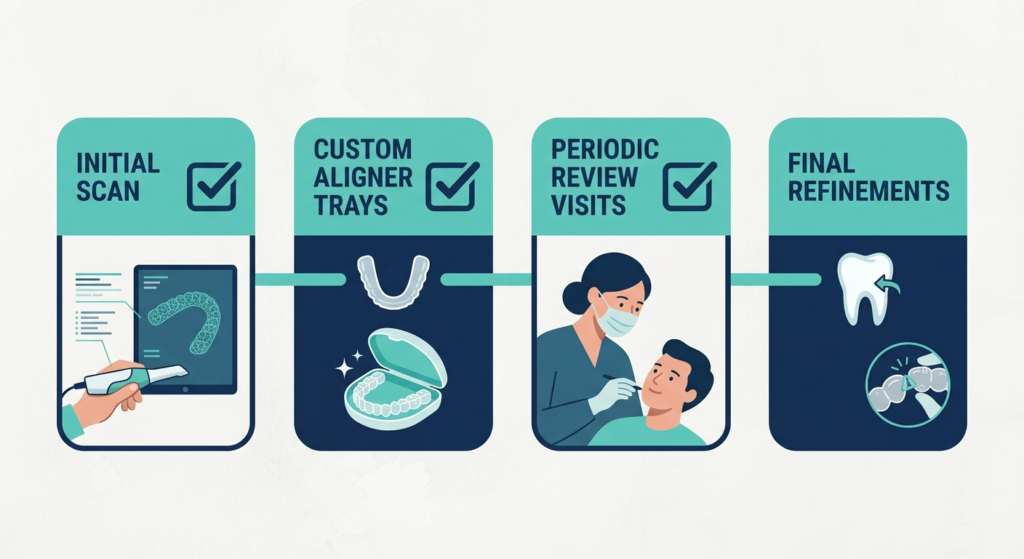
Infographic illustrating the four key steps in clear aligner treatment: initial scan, custom aligner trays, periodic review visits, and final refinements.
Frequently Asked Questions About Aligner Costs
How much do clear aligners cost in Kasturi Nagar?
At our Kasturi Nagar clinic, DentCare aligner treatment generally ranges from Rs 30,000 to Rs 1.5 lakh or more depending on the case, and Invisalign is priced after assessment. The scan that fixes your exact price costs Rs 3,500 to 4,000 and is adjusted against treatment.
Why is the price range so wide?
Because the number of trays is the price. A minor correction may need a handful of trays; a complex case may need twenty or more, and the system you choose also matters.
Is EMI available for aligners?
Yes. Typically 50 to 60 percent upfront and the balance in monthly installments, with no-cost EMI available.
Is the consultation fee extra?
The scan and evaluation costs Rs 3,500 to 4,000, and the full amount is adjusted against your treatment cost if you proceed. Review visits during treatment are free.
Are aligners more expensive than braces?
Usually yes for comparable cases – aligners sit in the premium bracket, while braces are often cheaper for smaller corrections. The full comparison: Invisalign versus braces in Bengaluru.
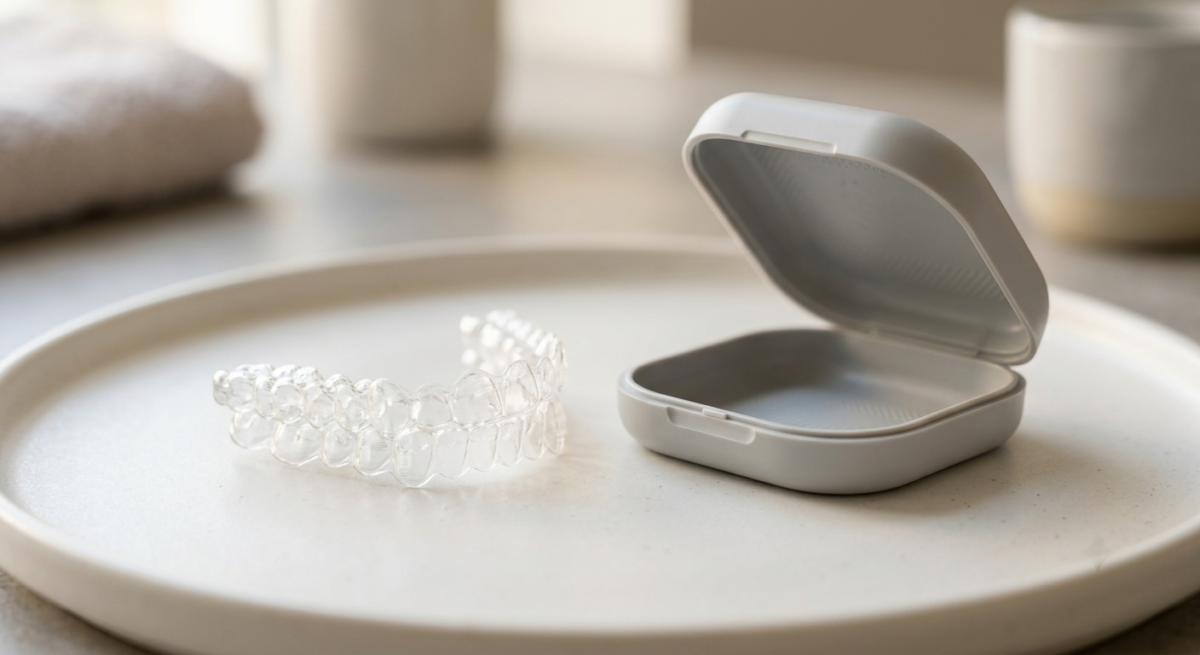
Clear aligner tray and its open storage case are placed on a round, off-white plate, set against a blurred background of toiletries and a grey surface.
Key Takeaways
Retainers are the final and non-negotiable stage of any orthodontic treatment.
Without them, teeth naturally drift back toward their old positions, a process called relapse.
There are two main types: removable retainers and fixed bonded retainers.
Wear is heaviest in the first months, then usually eases to long-term night-time wear.
The clinic’s refinement policy is separate from retention and does not cover relapse from skipping retainers.
Dr. Rupali Panpate reviews your retainer plan at the end of every case.
Finishing your aligners feels like the end of the story, but one more chapter decides whether your new smile lasts. Retainers are the final and non-negotiable stage of any orthodontic treatment, and at our clinic they are treated as essential rather than optional. Dr. Rupali Panpate reviews the retainer plan at the end of every case and explains exactly how to wear yours.
Why teeth try to move back
Teeth are not set rigidly in the jaw. They sit in bone, held by fibres that stretch and reshape as the teeth move during treatment. When aligners finish their work, those fibres and the bone around each tooth are still remodelling, and for a while the teeth are inclined to return to their old position.
This natural tendency is called relapse, and it is the single most common reason people end up disappointed years after otherwise successful treatment. Retainers exist precisely to hold the teeth steady through that settling period and well beyond it. If you are still weighing up treatment, our guide to how clear aligners work explains the movement side of the story.
The types of retainers
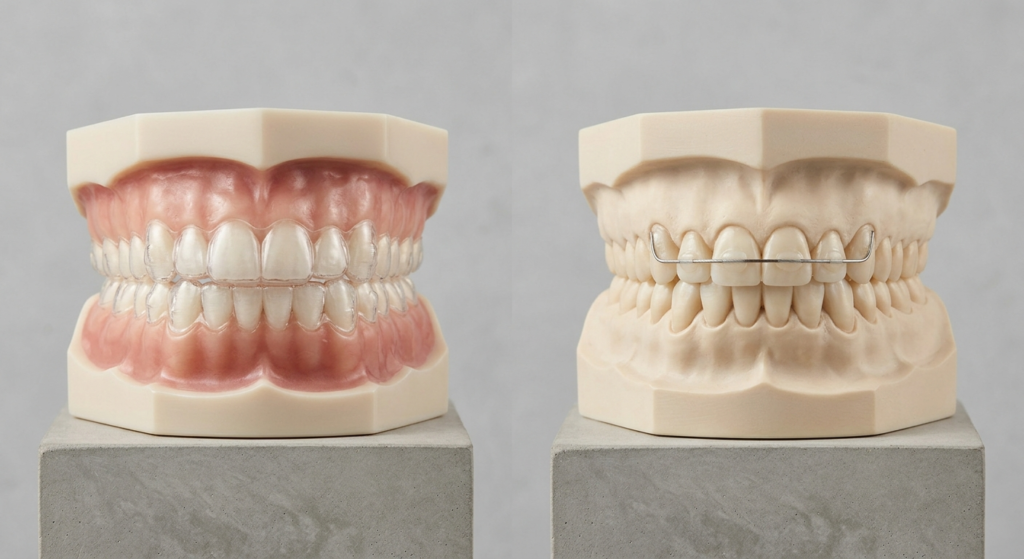
Side-by-side comparison of a clear aligner model and a traditional wire retainer model on dental casts.
There are two broad kinds. Removable retainers are clear trays, or a wire-and-plate design, that you take out to eat and clean, then wear as instructed. Fixed retainers are a thin wire bonded quietly behind the front teeth, working around the clock without you having to think about them.
Each has its place, and the right choice depends on your case, your bite, and how much support your teeth need to stay put. Dr. Rupali Panpate, an Invisalign approved doctor who plans every case personally, recommends the type that best protects your particular result. Many patients end up with a combination of both.
How long you wear retainers
A clear dental aligner rests on a wooden bedside table in a cozy, dimly lit bedroom at night.
The honest answer is longer than most people expect. Wear is usually heaviest in the first months after treatment, when relapse pressure is greatest, and then eases to night-time wear that continues in the long term.
Many dentists worldwide now regard some level of night-time retention as effectively lifelong, simply because the tendency to drift never fully disappears. Your own schedule is set by your dentist, based on your case. Following it is the whole point: a retainer worn as directed is what keeps your teeth where they belong.
What happens if you stop
This is where the clinic is direct with patients rather than reassuring. If you stop wearing your retainer against your dentist’s guidance, the teeth can move again, and the orthodontic result can be lost.
When that happens, the team who did the work cannot be held responsible, because retention is the patient’s part of a shared effort. The trays do the moving, and the retainer keeps it. Skipping retention is the most common way a good result quietly unravels, and it is entirely avoidable.
Refinements are a different thing
It is worth clearing up a common confusion. Retention is not the same as refinement. Sometimes, even with good cooperation, a tooth needs a little extra fine-tuning to reach the planned position, and the clinic handles these under its refinement policy, at no or minimal cost within the first year after treatment.
That policy is not a promise against neglecting your retainers, and it does not cover relapse caused by not wearing them. It simply reflects that the goal is your final result, and small adjustments to reach it are part of the service you signed up for.
Talk to us about retention in Kasturi Nagar
Whether you are about to finish aligner treatment or you are worried that teeth from an older treatment have already shifted, retention can be planned or restarted as part of aligner treatment at our clinic. The retainer options that suit you, and their cost, are discussed as part of your plan so there are no surprises.
Call 097390 62002 to speak to Dr Rupali’s Dental Care and Implant Centre, Kasturi Nagar, Bengaluru. If you are still deciding on treatment itself, our guide to the clear aligner journey walks through what to expect from start to finish.
Frequently Asked Questions
How long do I need to wear my retainers?
Wear is heaviest in the first months after treatment, then usually eases to night-time wear that continues in the long term. Because teeth always tend to drift, many patients keep some night-time retention indefinitely, and your dentist sets the exact schedule for your case.
Are retainers included in the treatment cost?
The retainer options that suit your case, along with their cost, are discussed as part of your treatment plan at the assessment. That way you know what is included and what to expect before you begin, with no surprises once your aligners are complete.
What should I do if I lose or break a retainer?
Contact the clinic as soon as you can so a replacement can be arranged quickly. The sooner a new retainer is fitted, the less chance your teeth have to drift in the meantime, which protects the result you have already achieved through treatment.
Can my teeth still move years after treatment?
Yes. The natural tendency for teeth to shift never fully goes away, which is why long-term night-time retention is recommended. Consistent retainer wear, even years later, is what keeps your result stable and prevents a slow return of the old position.
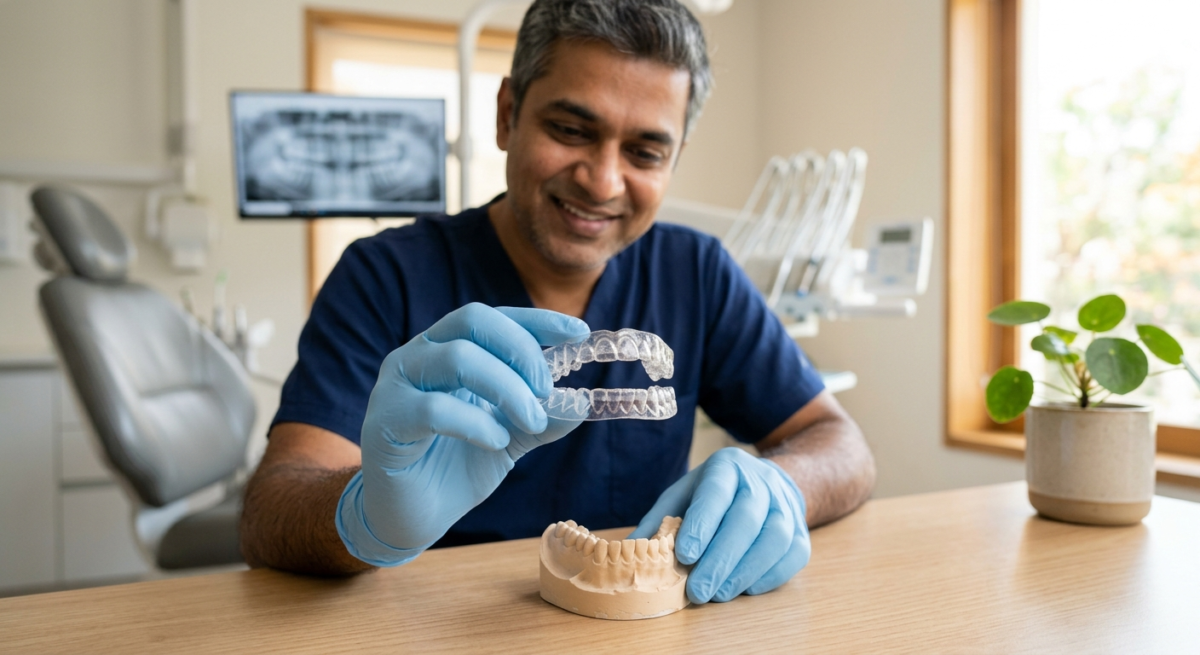
A happy dentist shows how a clear aligner fits on a patient’s teeth model.
Key Takeaways
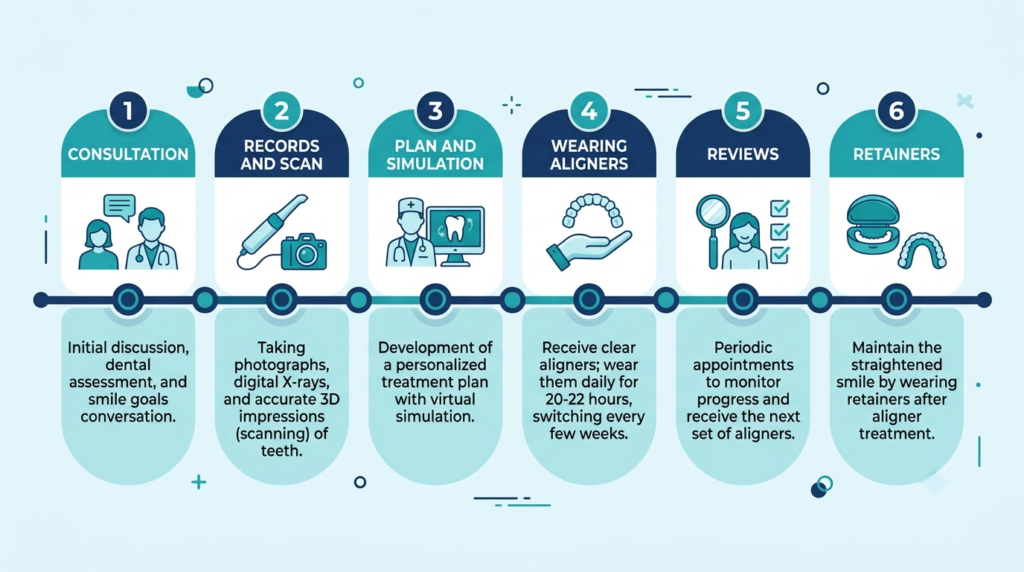
Clear aligner treatment at our clinic runs in six clear stages, from your first consultation through to retainers.
A full set of records, including photographs, an OPG X-ray, a lateral cephalogram and a TRIOS 3 digital scan, is taken before any tray is made.
You see a simulation of your expected result before you commit to treatment.
Most cases finish in two to nine months, supported by ten-day check-in calls and monthly reviews.
The scan and complete evaluation cost Rs 3,500 to 4,000, adjusted against your treatment cost if you proceed.
Dr. Rupali Panpate plans and manages every case personally, and retainers are a mandatory final stage.
If you are considering clear aligners, it helps to know what the road ahead actually looks like. At our clinic, aligner treatment follows a clear, well-worn path, and Dr. Rupali Panpate plans and manages each case personally from start to finish. Here is what to expect, step by step.
It starts with a conversation and a gum check
Every aligner journey begins with a conversation and an examination, not a sales pitch. Dr. Rupali Panpate, an Invisalign approved doctor who plans and manages every case herself, first listens to what you want to change, then checks whether your teeth and gums are ready for treatment. Aligners only move teeth well on a healthy foundation, so if there is any gum inflammation, a cavity to be filled, or cleaning to be done, that is taken care of first. This is also where expectations are set honestly: what aligners can realistically achieve for your case, and roughly how long it is likely to take.
Records and your digital scan
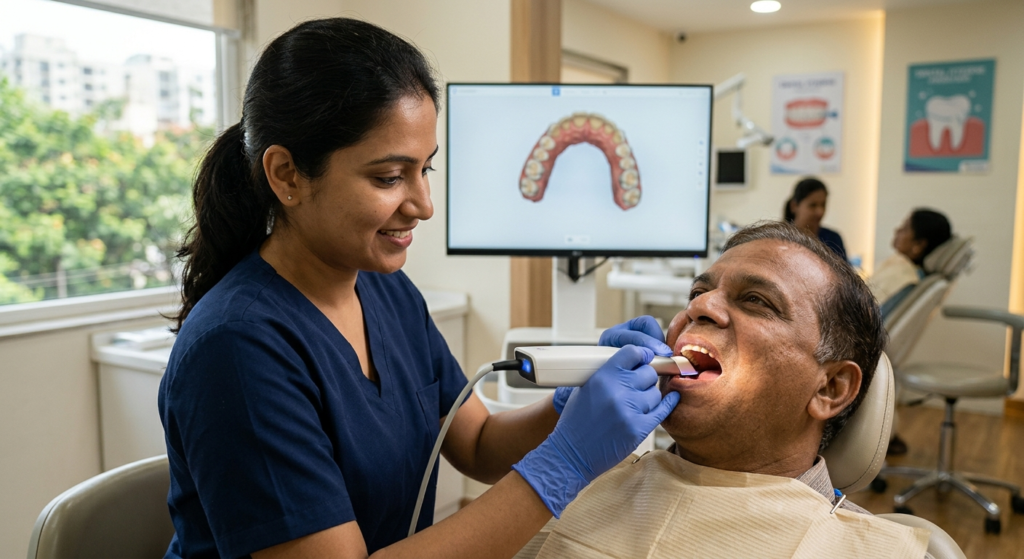
A female dental professional performs an intraoral scan on a male patient in a modern dental clinic.
Once your mouth is ready, the clinic takes a complete set of records in a single sitting so the treatment can be planned tooth by tooth. This usually means eight to ten clinical photographs, an OPG X-ray to show the roots and jawbone, and a lateral cephalogram that captures your profile and bite relationship. In place of the old putty impressions, a TRIOS 3 intraoral scanner builds a precise three-dimensional model of your teeth in a few minutes.
Together these records leave nothing to guesswork, which is exactly what accurate tooth movement depends on. If you want to understand the basics first, our guide to how clear aligners work is a good place to start.
Seeing your result before you begin
One of the real advantages of digital planning is that you can see where you are headed before committing to anything. From the scan, a simulation is prepared that shows how your teeth are expected to move from their position today to their final one, and seeing that preview makes the decision far easier. At this stage the system best suited to your case is chosen, either Invisalign or DentCare, along with the number of trays, the likely timeline, and the cost including EMI options.
The scan and complete evaluation cost Rs 3,500 to 4,000, and that amount is adjusted against your treatment cost if you decide to proceed. Most patients begin with fifty to sixty percent of the fee, with the balance spread comfortably over EMI. If cost is on your mind, our breakdown of aligner costs in Bangalore goes into detail.
Life with your aligners
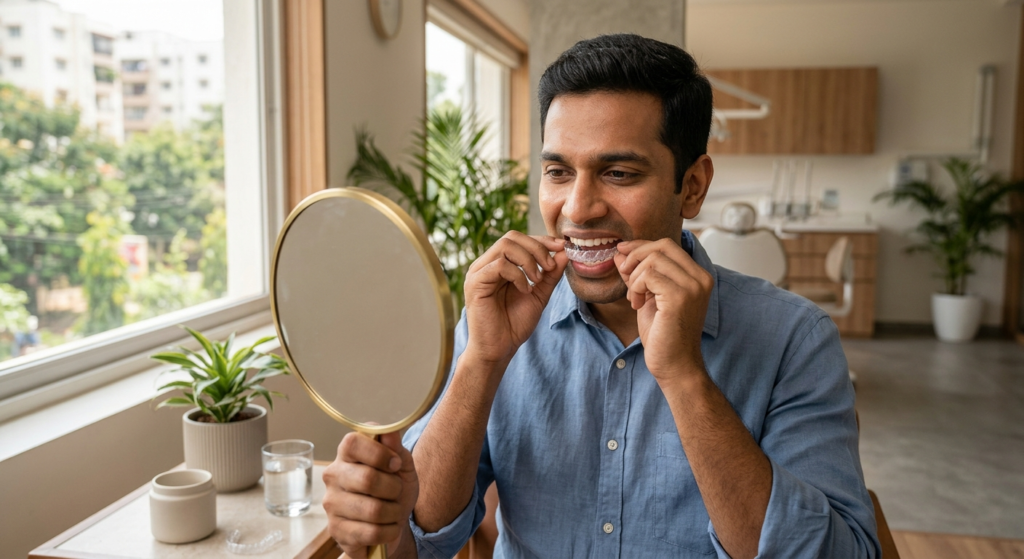
A young man, smiling while using clear aligners in a modern dental clinic.
Your aligners arrive as a numbered series of clear, removable trays. Each one nudges your teeth a small, planned amount, and you move to the next tray on the schedule your dentist sets. The trays are worn twenty to twenty-two hours a day and taken out only for meals, for drinks other than water, and for brushing.
For most people the full series is completed in two to nine months, which is considerably quicker than conventional braces, where treatment usually runs about one to one and a half years. Your exact timeline is confirmed for your own case once the evaluation is done.
Check-ins, reviews and refinements
You are never left to manage treatment on your own. The clinic makes ten-day check-in calls to see how you are getting along with each new tray, and you come in for monthly reviews where your progress is measured against your earlier trays. These review consultations are part of your treatment, not billed as extras.
If a particular tooth needs a little more guidance than the plan expected, that is handled under the clinic’s refinement policy, at no or minimal cost within the first year. The goal throughout is the result you saw in the simulation, not simply reaching the last tray.
Retainers to hold your new smile
Moving teeth is only half the work. Once they are in position, the bone and tissue around them need time to settle, and without support they will drift back toward where they started. That is why retainers are a mandatory part of every case here rather than an optional extra.
Your dentist fits your retainers and explains how to wear them so that the result you worked for actually lasts. You can read more in our guide to retainers after aligners.
Book your assessment in Kasturi Nagar
The clearest way to understand your own journey is to have the assessment done. For Rs 3,500 to 4,000, adjusted against your treatment if you go ahead, you leave with a real answer: whether aligners suit your case, how long it should take, and what it will cost including EMI. Call 097390 62002 to book your assessment at Dr Rupali’s Dental Care and Implant Centre, Kasturi Nagar, Bengaluru, and start your journey with aligner treatment at our clinic planned by a dentist who will see it through with you.
A six-step infographic illustrating the clear aligner treatment process, from initial consultation to retention.
Frequently Asked Questions
How long does clear aligner treatment take?
For most cases, clear aligner treatment takes between two and nine months. Simpler corrections finish faster and more complex ones take longer, so the exact timeline is confirmed only after your evaluation. Conventional braces, by comparison, usually run about one to one and a half years.
Does the scan cost extra?
The scan and complete evaluation cost between Rs 3,500 and Rs 4,000. If you decide to go ahead with treatment, that amount is adjusted against your total treatment cost, so it is not an additional charge on top of the fee. You leave the visit with a clear plan and price.
How often will I need to visit during treatment?
You receive ten-day check-in calls after starting each new tray, and you come in for monthly review visits where your progress is compared against your earlier trays. These review consultations are included in your treatment fee rather than billed as extras, so support stays continuous throughout.
What happens after the aligners are finished?
Once your teeth reach their planned positions, you move on to retainers, which are a mandatory final stage of treatment. Retainers hold your teeth in place while the surrounding bone settles, which protects your result and prevents the teeth from drifting back over time.
 Skip to the content