 Skip to the content

Key Takeaways
- Most spacing, crowding and many bite issues can be treated with clear aligners, but candidacy is decided by a dentist, not an online quiz.
- Good candidates are adults and teens with healthy gums and enough bone, who can commit to wearing trays 20 to 22 hours a day.
- Braces are usually better for children under 15, for developmental or jaw-related problems, and for very extensive crowding.
- Some cases are referred or treated differently first: active gum disease, significant bone loss, or poor oral hygiene.
- Any decay, gum issues or cleaning needs are sorted out before aligner treatment begins.
- At our Kasturi Nagar clinic, Dr. Rupali Panpate decides suitability after a full assessment, never over the phone.
Clear aligners have become remarkably versatile, but they are not right for every mouth or every case. The honest way to know whether they suit you is an assessment, not a self-diagnosis. Here is who tends to be a good candidate, who is better served another way, and how the decision is actually made.
Who clear aligners work well for
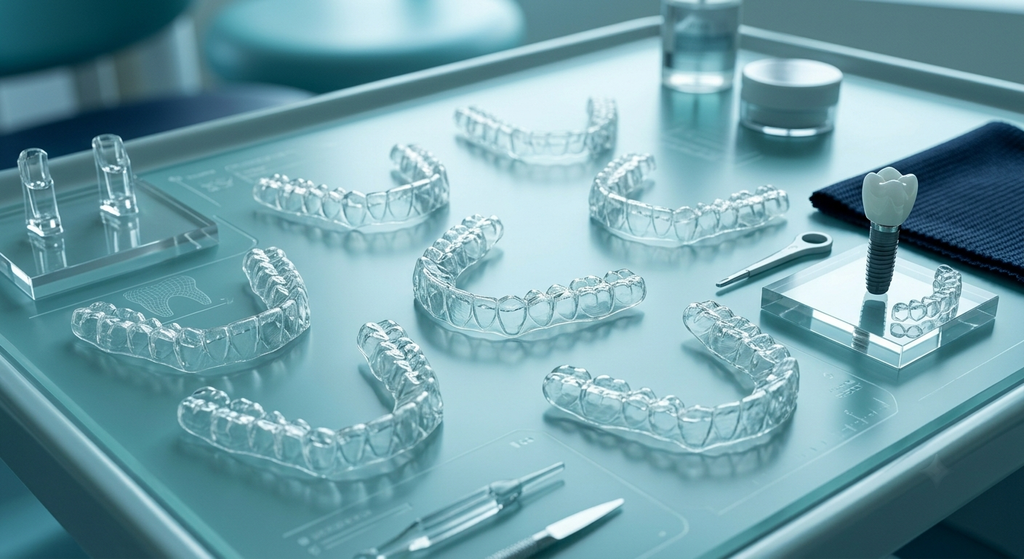
Aligners suit a wide range of adults and older teenagers. If you have spacing, crowding, overlapping teeth, or a bite issue such as an open, deep or cross bite, there is a good chance aligners can help, provided your gums and supporting bone are healthy.
The one non-negotiable is commitment. Aligners only move teeth while they are being worn, so a good candidate is someone who can realistically keep the trays in for 20 to 22 hours a day. If you can do that, you are most of the way there. You can read more about how clear aligners work before you decide.
Who is usually better with braces
Clear aligners are not the automatic answer for everyone. Children under 15 are often better suited to conventional braces, because the daily discipline aligners demand is hard to sustain at that age and the jaws are still developing.
Braces are also the stronger choice for developmental or jaw-related problems and for very extensive crowding, where fixed appliances can apply the constant force these cases need. This is not aligners being inferior, simply the right tool for a different job.
When we treat something else first
Sometimes the answer is not aligners or braces yet, but something before either. Active gum disease, significant bone loss, or poor oral hygiene all need attention first, because teeth move through living bone and that foundation has to be sound.
In these situations we are honest with you about what comes first. Occasionally a case is better referred for specialist care, and we will tell you plainly if that is the right path for your health.
It is the dentist who decides, not the patient
This is a point Dr. Rupali Panpate makes with every patient. It is never the patient who decides whether aligners fit, it is always the doctor, based on what the clinical evaluation actually shows.
That protects you. Insisting on aligners for a case that is not suitable is how people end up disappointed or worse off. An honest assessment, even when the answer is not the one you hoped for, is what leads to a result you will be happy with.
Getting ready before treatment begins
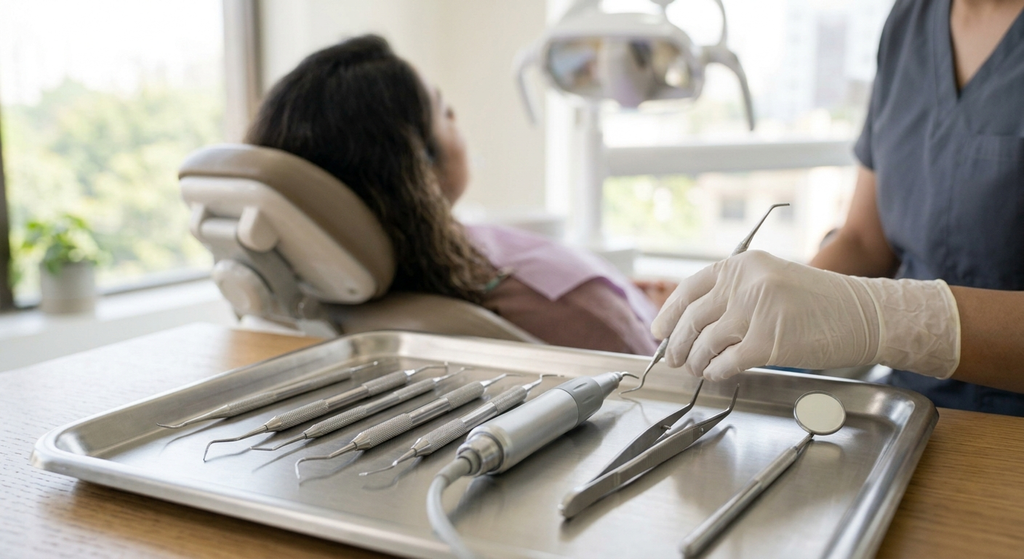
If you are a candidate, a little preparation makes treatment smoother. Any cavities are filled, a professional cleaning is done if needed, and your gums and hygiene are stabilised before the first tray is made.
Only once that groundwork is in place do we take the records and begin. It is a short step that protects the whole treatment.
Find out if you are a candidate
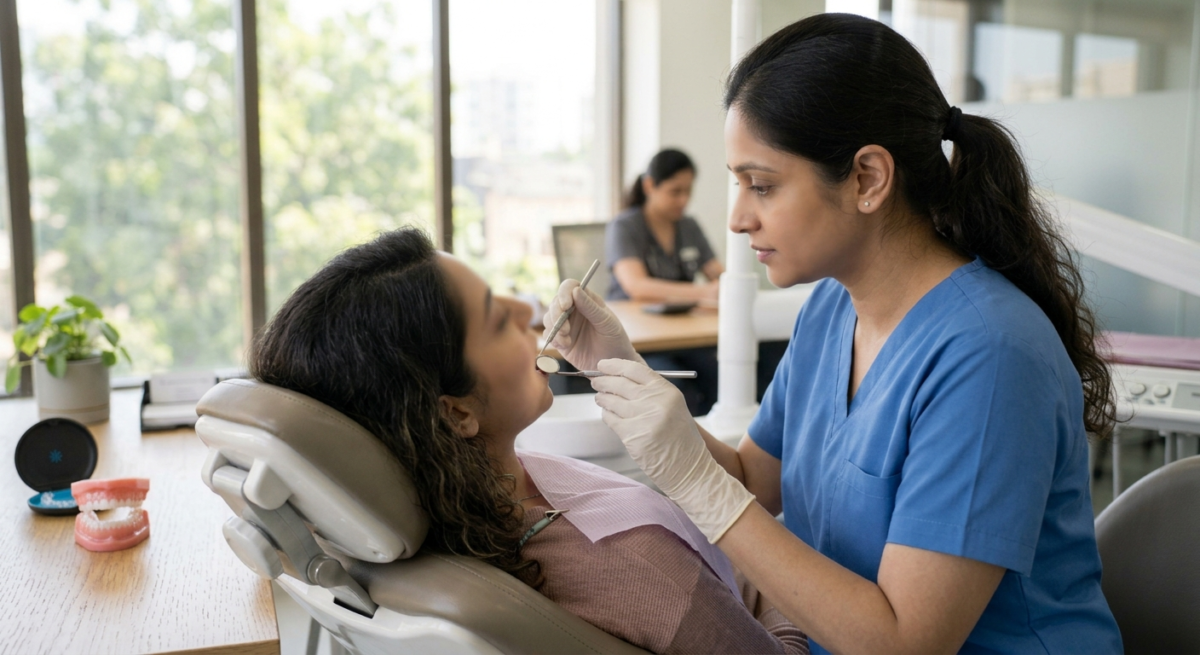
The only way to know for certain is to have the assessment. It includes a clinical exam, photographs, an OPG X-ray, a lateral cephalogram and a TRIOS 3 digital scan, and you leave with a clear answer on whether aligners or braces suit your case, how long treatment should take, and what it will cost.
Call 097390 62002 to book your assessment at Dr Rupali’s Dental Care and Implant Centre, Kasturi Nagar, Bengaluru, or read what to expect in our guide to the clear aligner journey and about aligner treatment at our clinic.
Frequently Asked Questions
Is there an age limit for clear aligners?
We treat aligner patients roughly between the ages of fifteen and seventy. Teenagers from around fourteen to eighteen are considered case by case, with a look at discipline and parental support, while children under fifteen are usually better suited to conventional braces.
Can I get aligners if I have gum problems?
Not until the gums are healthy. Aligners move teeth through living bone, so active gum disease or significant bone loss must be treated first, and any cleaning, fillings or hygiene work is completed before treatment begins. A healthy foundation is what makes tooth movement safe.
How do you decide if I am suitable?
Suitability comes from a full assessment, not a phone call. Dr. Rupali Panpate examines your teeth, gums and bite, then takes photographs, an OPG X-ray, a lateral cephalogram and a TRIOS 3 digital scan, and only then confirms whether aligners or braces are right for your case.
What if aligners are not right for my case?
You get an honest answer. If your case is better treated with braces, or needs gum treatment or another step first, that is exactly what we recommend. The goal is the right result for your teeth, not fitting every patient into the same treatment regardless of suitability.