Categories
Clear Aligners & Braces

Can Aligners Fix Bite Problems? Open, Deep and Closed Bites

Key Takeaways

  • Clear aligners can treat open, deep and closed bites in suitable cases, once a dentist confirms the cause.
  • Mild to moderate bites that sit in the teeth respond best to clear aligners.
  • Bites rooted in the jaw usually need braces, and severe cases may need surgery first.
  • An OPG X-ray and lateral cephalogram show whether the problem is in the teeth or the jaw.
  • Bite correction often needs refinement trays, so progress is reviewed step by step.
  • Retainers are mandatory afterwards, because a corrected bite can drift back without them.

A bite problem, called malocclusion, is a mismatch in how your upper and lower teeth meet when you close your mouth. Open bite, deep bite and closed bite are three common versions, and clear aligners can treat all three in many adults and older teenagers.

The key word is suitable. Whether aligners work for you depends on whether the problem sits in the teeth or in the jaw, and that is decided by an assessment, not by a photo or an online quiz.

What open, deep and closed bites actually are

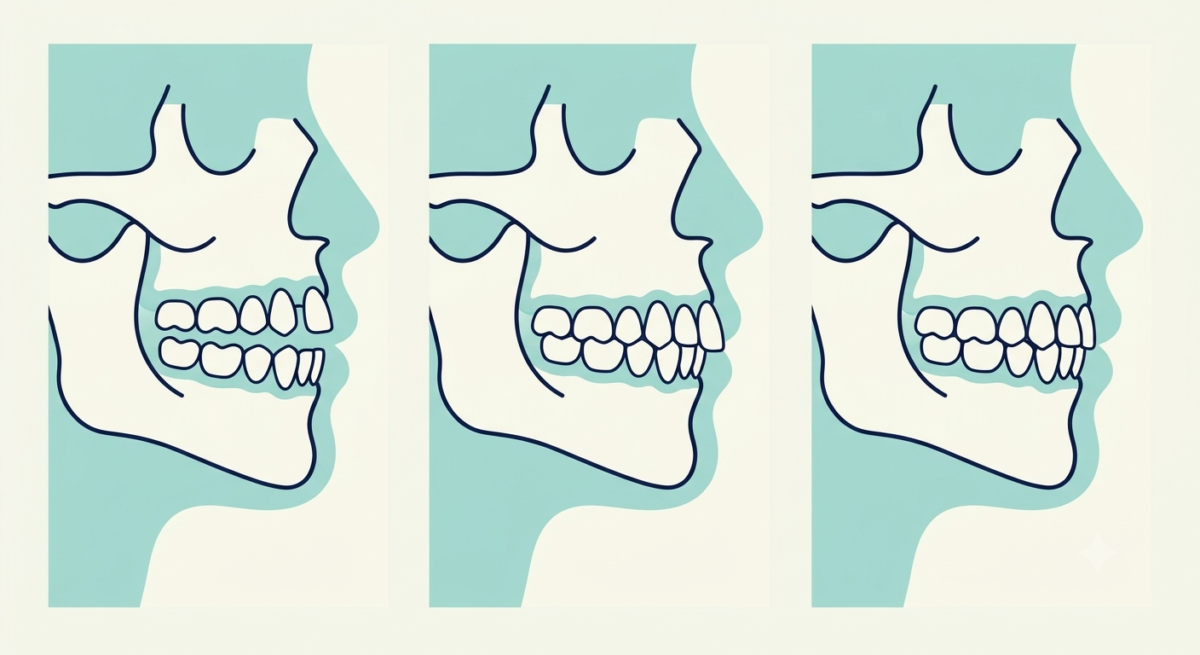
An open bite means your front teeth do not touch when you close your mouth, leaving a gap between the top and bottom front teeth. Childhood thumb sucking, long pacifier use and a tongue thrust are common causes.

A deep bite means the upper front teeth cover too much of the lower ones. Many patients call this a closed bite, and the medical term is a deep overbite, as Cleveland Clinic explains.
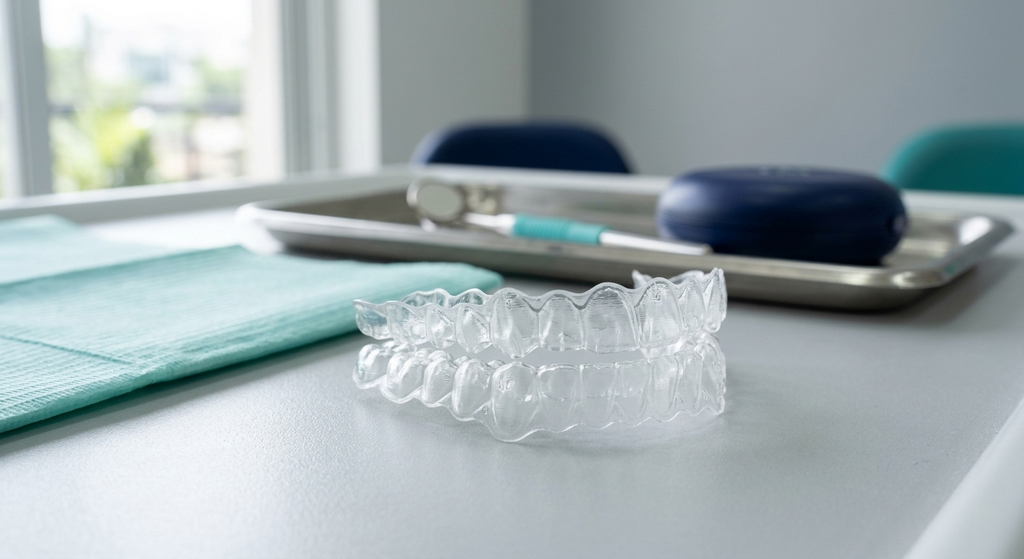
Clear aligner trays used to treat open bite and deep bite
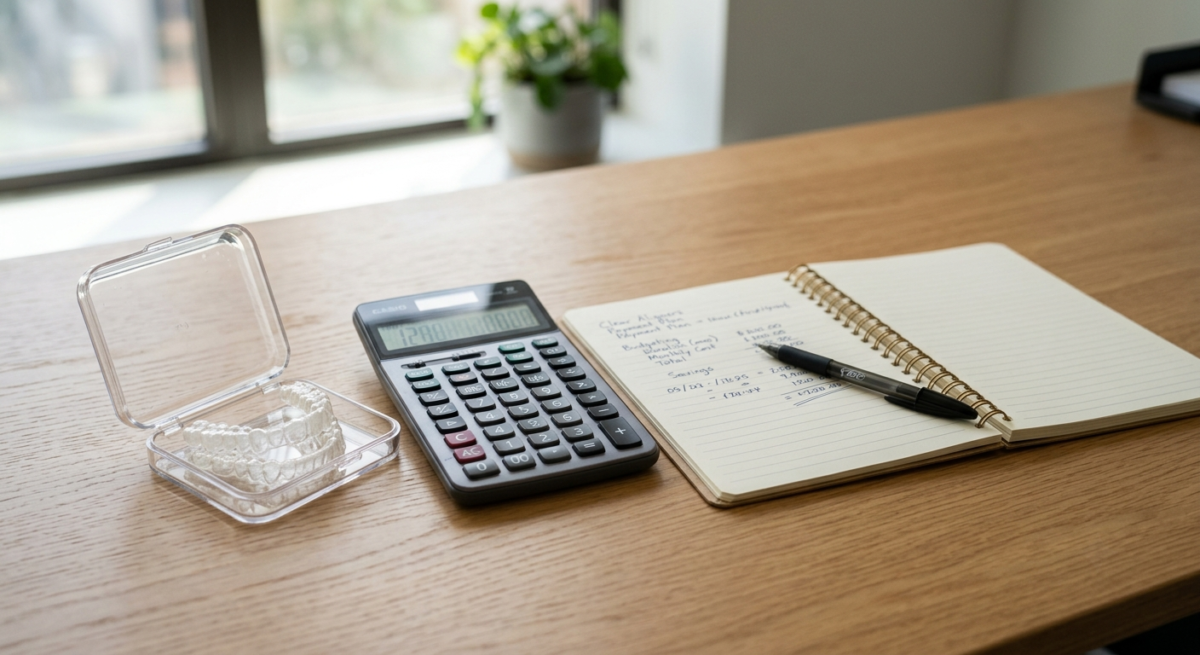
A pair of transparent clear aligner trays sitting on a clinical desk with dental tools in the background
Bite typeWhat you noticeCan clear aligners help?When braces or a specialist come first
Open biteFront teeth do not meet when the mouth is closedOften, when mild to moderate and caused by the teeth or a habitJaw-related open bites, or a habit that continues
Deep biteUpper front teeth cover too much of the lower teethOften, when the cause is in the teethJaw-related deep bites
Closed biteEveryday name for a deep biteSame as a deep biteSame as a deep bite
Jaw-related biteFace or profile looks out of balanceNot on their ownBraces, or surgery first for severe cases

Can aligners fix an open bite?

Yes, in many mild to moderate cases. Aligners close an open bite mainly by moving the front teeth so the upper and lower teeth meet. A 2025 scoping review of adult patients reported bite improvements of roughly 2.3 to 3.4 millimetres across several studies, which is why the size of the gap matters so much.

The same review notes that treatment often uses extra aids and needs refinements, so a good plan always includes regular reviews. If a habit such as tongue thrust caused the gap, it has to be corrected too, or the teeth can drift open again.

Can aligners fix a deep bite or closed bite?

Often, yes, when the deep bite is in the teeth rather than the jaw. A 2025 systematic review in Clinical Oral Investigations found that clear aligners can correct mild to moderate dental deep bites, but are less effective than braces for skeletal ones.

The same review found that the correction planned on screen often falls short of what is achieved, and it rated the evidence as low quality. That is why honest planning leaves room for refinement trays, and why a dentist should tell you what is realistic before you start.

When braces or a specialist should come first

If the jaw itself is the cause, aligners alone will not solve it. Signs include a face or profile that looks out of balance, or a lower jaw sitting noticeably forward or back. Braces are the usual route here, and our clinic offers braces with visiting orthodontists once the case is confirmed.

Very severe jaw cases can need surgery first, and these are referred for specialist care. Gum disease or heavy bone loss must also be treated before any teeth are moved, as set out in our guide to who can get clear aligners.

Children under 15 are usually better suited to braces as well. Our guide to clear aligners for teens explains where that line is drawn.

How Dr. Rupali Panpate decides if your bite suits aligners
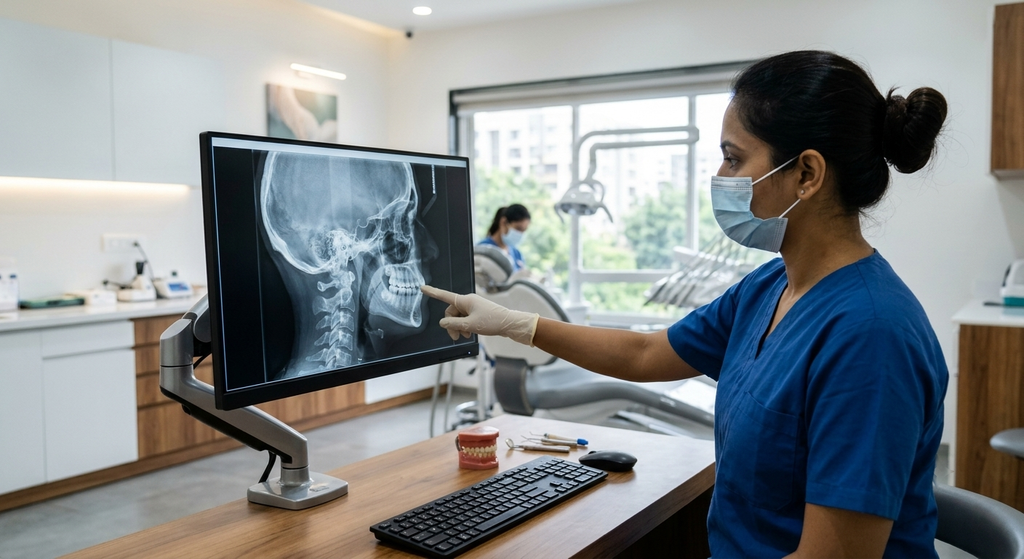
Dentist reviewing a lateral cephalogram X-ray to assess a bite problem
Diagnostic evaluation of a patient’s skull and bite alignment using a side-profile X-ray display

At our Kasturi Nagar clinic, Dr. Rupali Panpate plans and manages every aligner case personally. She starts with a clinical exam and photographs, then takes an OPG X-ray and a lateral cephalogram, which together show whether the bite problem is in the teeth or the jaw.

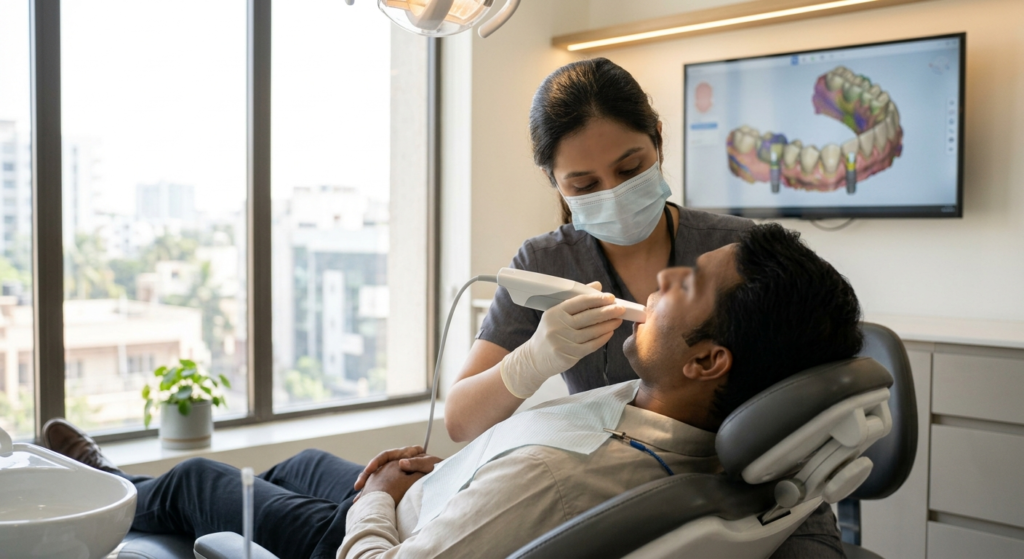
A TRIOS 3 digital scan follows, and you see a simulation video of the expected result before you commit. It is always the dentist who decides whether aligners fit, never the patient, because the wrong choice costs time and money. The full sequence is in our guide to the clear aligner journey.
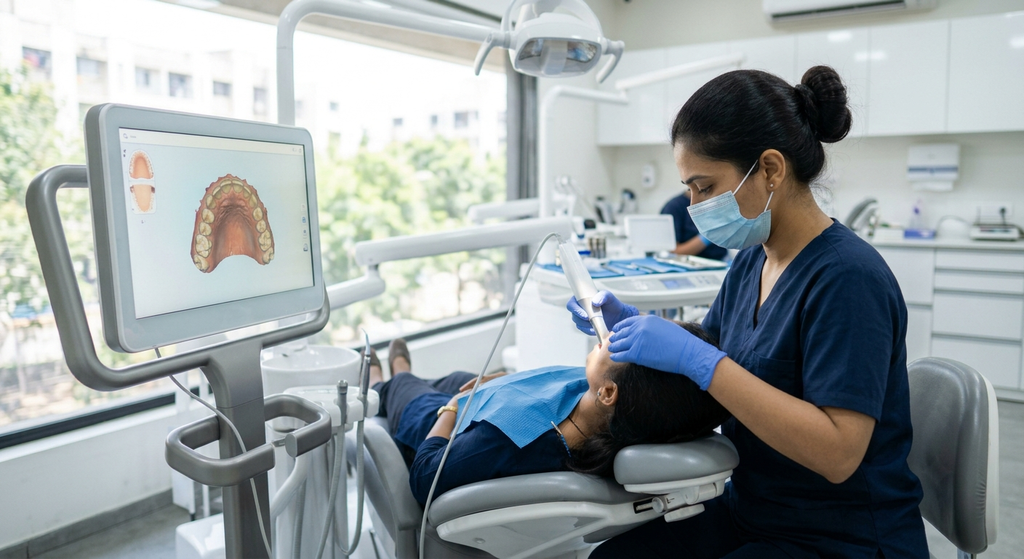
TRIOS 3 digital scan used to plan clear aligners for a bite problem
Dentist performing a 3D digital oral scan on a patient using a handheld intraoral scanner.

What to expect during bite treatment

Bite correction is more demanding than closing a small gap, so expect regular reviews. Review visits during treatment are free, and refinement trays within the first year are provided at no or minimal cost under our refinement policy.

Clear aligner treatment generally runs 2 to 9 months, and your own timeline is confirmed after the simulation. Retainers are mandatory afterwards, because a corrected bite can slowly drift back, as we explain in retainers after aligners.

For what treatment costs, see our guide to clear aligner cost in Bangalore.

As Verified By

Check your bite before you decide

If you think you have an open, deep or closed bite, a short assessment gives you a clear answer on whether aligners or braces suit you, how long treatment should take and what it will cost.

Call 097390 62002 or book an appointment at Dr Rupali’s Dental Care and Implant Centre, Kasturi Nagar, Bengaluru. You can also read about aligner treatment at our clinic or visit our Kasturi Nagar clinic page.

Frequently Asked Questions

Can clear aligners fix an open bite?

In many mild to moderate cases, yes. Aligners usually close an open bite by moving the front teeth so the upper and lower teeth meet.

If the cause is the jaw, or a habit such as tongue thrust continues, braces or habit correction may be needed first.

Can clear aligners correct a deep bite or closed bite?

Often, when the problem is in the teeth rather than the jaw. Research shows mild to moderate deep bites can be corrected with aligners, though the result achieved can fall short of the plan on screen.

Refinement trays are therefore a normal part of the process.

How do I know if my bite problem is in my teeth or my jaw?

Only an assessment can tell you. Dr. Rupali Panpate uses a clinical exam, photographs, an OPG X-ray and a lateral cephalogram, which shows the profile of your jaws and teeth.

This is why we never confirm suitability over the phone.

Will my bite go back after aligner treatment?

It can, which is why retainers are mandatory. Teeth tend to drift toward their old positions after treatment, and a corrected bite is no exception.

Wearing your retainers as advised is what keeps the new bite stable.

Are braces better than clear aligners for bite problems?

Neither is simply better. Aligners suit mild to moderate bites that sit in the teeth, while braces are usually the stronger choice for jaw-related bites, younger children and very complex cases.

The assessment decides which fits your case.
Categories
Clear Aligners & Braces

Living With Clear Aligners: Eating, Cleaning and Daily Life

Key Takeaways

  • Clear aligners fit around daily life: you remove them to eat and clean, then wear them 20 to 22 hours a day.
  • Only plain water should be drunk while the trays are in; take them out for all meals and other drinks.
  • New trays feel tight for a day or two, which is normal pressure moving your teeth, not a problem.
  • Clean your teeth and rinse your trays before putting them back, to keep both fresh.
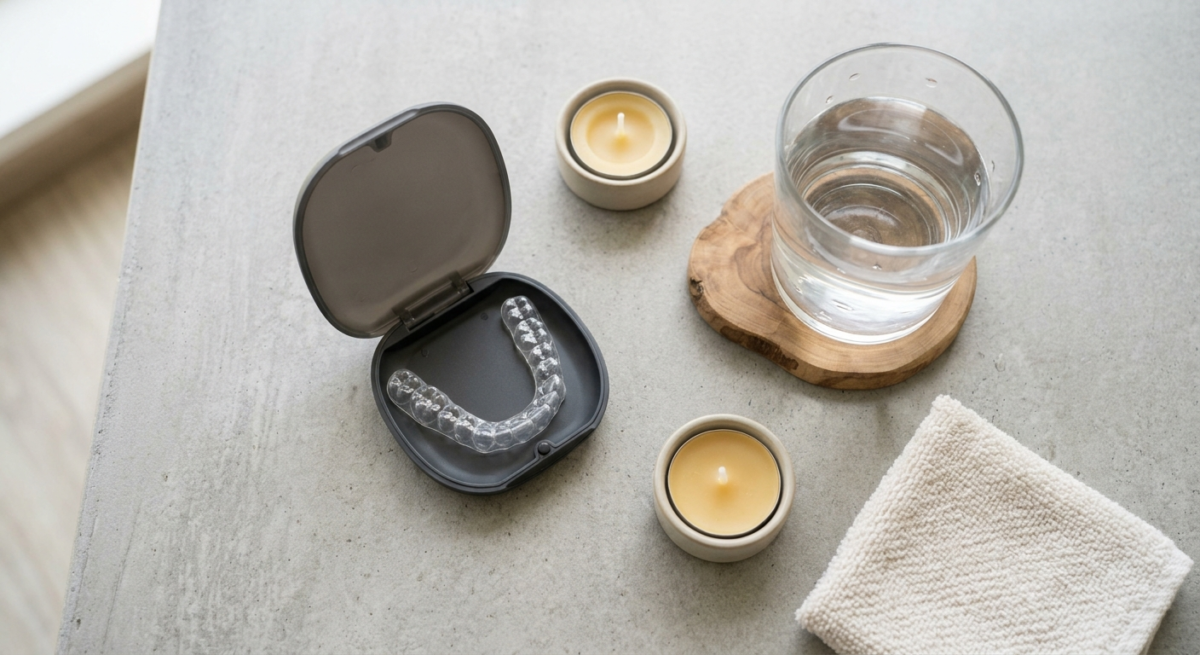
  • Keep trays in their case when they are out, never wrapped in a napkin where they get thrown away.
  • Consistent daily wear is the single habit that keeps treatment on schedule.

One of the best things about clear aligners is how easily they slot into normal life. There are a few simple habits to learn, and once they become routine you barely think about them. Here is what living with aligners actually looks like, day to day.

Eating with aligners

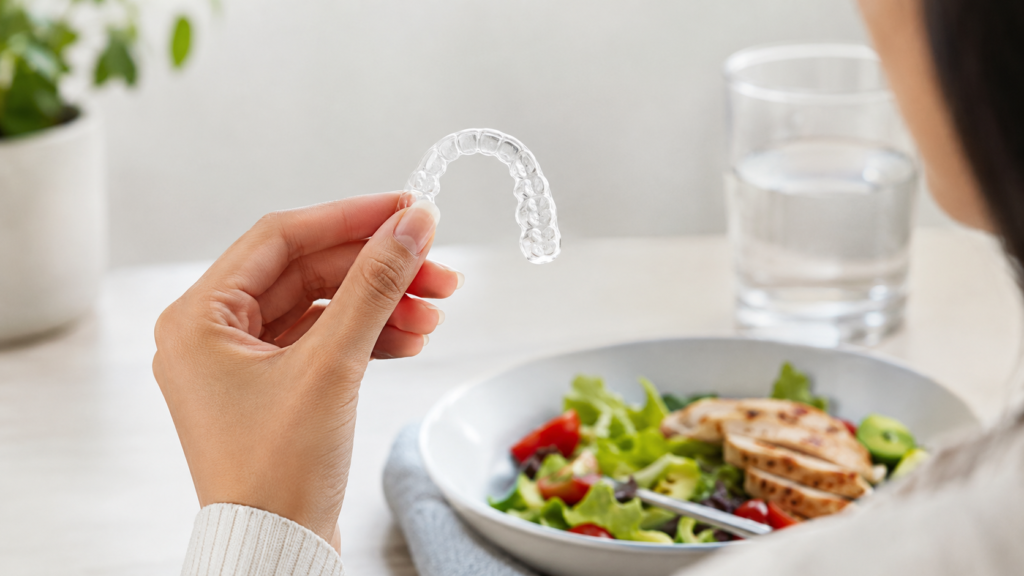
Removing a clear aligner tray before eating
A person holding a clear dental aligner tray before a meal in natural light.

This is the question everyone asks first, and the answer is refreshingly simple: you take your aligners out to eat. That means no food restrictions at all, which is a real advantage over fixed braces.

You can enjoy whatever you normally would, then brush or rinse before the trays go back in so nothing is trapped against your teeth. The only discipline here is remembering to put them back promptly, because the hours still count.

Drinking: water in, everything else out

While your aligners are in, stick to plain water. Hot drinks like tea and coffee can warp the thin plastic, and coloured or sugary drinks can stain the trays and sit against your teeth.

So take your aligners out for your morning coffee or an evening juice, enjoy it, then clean your teeth and pop the trays back. It becomes second nature within a few days.

Is it painful? What new trays feel like

Aligners are far gentler than most people expect. When you move to a new tray in the series, you will usually feel mild pressure or tightness for a day or two. That sensation is simply the aligner doing its job and guiding your teeth, and it settles quickly. A simple trick helps here: start each new tray in the evening, so you sleep through the tightest few hours and wake with most of the adjustment already behind you.

If anything ever feels sharp or genuinely painful rather than just tight, that is worth a quick call to the clinic. For most people, though, each new tray is a minor, short-lived adjustment.

Keeping your aligners and teeth clean

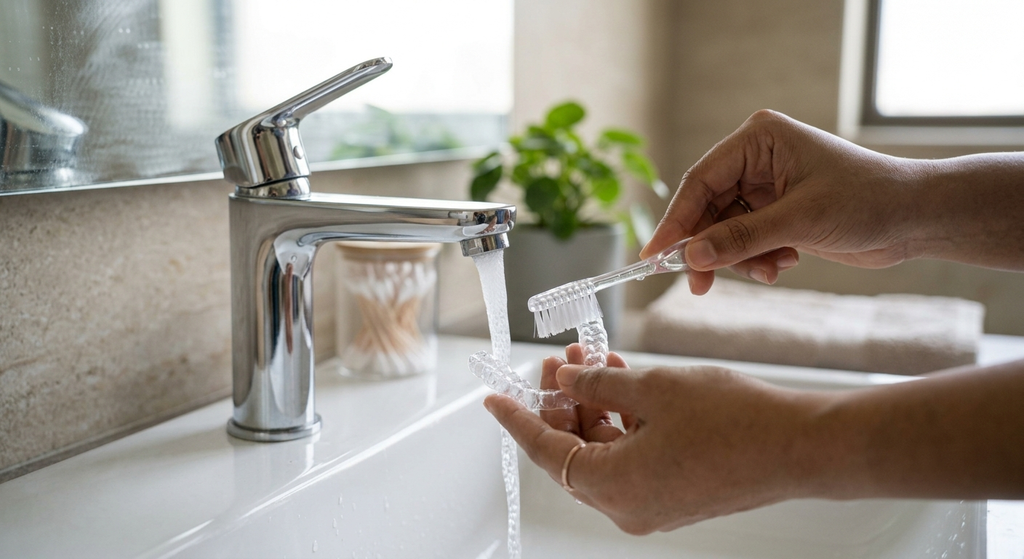
Cleaning a clear aligner tray with a soft brush
Gently brush your aligner trays under running water as part of your daily cleaning routine

Good hygiene keeps both your trays and your smile fresh. Rinse your aligners every time you take them out, and give them a gentle brush with a soft toothbrush and lukewarm water.

Avoid hot water, which can distort the plastic, and avoid coloured mouthwash that can tint the trays. Brushing and flossing your teeth before reinserting keeps everything clean and stops anything being sealed against the enamel. For the bigger picture, see our guide to the clear aligner journey.

Small habits that keep treatment on track

A few easy habits make the whole journey smoother. Always store your trays in their case when they are out, never wrapped in a tissue, which is the most common way aligners end up in the bin.

Carry the case and a travel toothbrush when you are out, keep an eye on your daily wear time, and bring your current and previous trays to review visits. These little routines are what keep your treatment moving exactly as planned, and they carry straight through to your retainers after aligners at the end.

Living with aligners, the easy way

None of this is complicated, and our team walks you through all of it before you start, so there are no surprises. Aligner treatment is designed to fit your life, not take it over.

If you are considering treatment and want to know how it would fit your routine, call 097390 62002 to talk to Dr Rupali’s Dental Care and Implant Centre, Kasturi Nagar, Bengaluru, or read about aligner treatment at our clinic.

Frequently Asked Questions

Do clear aligners hurt?

Most people feel mild pressure for the first day or two after switching to a new tray, which is the aligner gently moving your teeth and is completely normal. It settles quickly, and any discomfort is usually far milder than the soreness people associate with conventional braces.

Can I eat with aligners in?

No. You remove your aligners for all meals and snacks, which is actually one of their biggest advantages, because you can eat normally with no food restrictions at all. Just brush or rinse before putting the trays back so food is not trapped against your teeth.

Can I drink coffee or tea with my aligners in?

Only plain water should be drunk while the trays are in. Hot drinks can warp the plastic and coloured drinks can stain the trays, so take your aligners out for coffee, tea and anything other than water, then clean your teeth before reinserting them.

How do I clean my aligners?

Rinse your aligners whenever you take them out, and gently brush them with a soft toothbrush and lukewarm water. Avoid hot water, which can distort the plastic, and keep them in their case when they are not in your mouth so they stay clean and do not get lost.

Categories
Clear Aligners & Braces

Am I a Candidate for Clear Aligners?

Key Takeaways

  • Most spacing, crowding and many bite issues can be treated with clear aligners, but candidacy is decided by a dentist, not an online quiz.
  • Good candidates are adults and teens with healthy gums and enough bone, who can commit to wearing trays 20 to 22 hours a day.
  • Braces are usually better for children under 15, for developmental or jaw-related problems, and for very extensive crowding.
  • Some cases are referred or treated differently first: active gum disease, significant bone loss, or poor oral hygiene.
  • Any decay, gum issues or cleaning needs are sorted out before aligner treatment begins.
  • At our Kasturi Nagar clinic, Dr. Rupali Panpate decides suitability after a full assessment, never over the phone.

Clear aligners have become remarkably versatile, but they are not right for every mouth or every case. The honest way to know whether they suit you is an assessment, not a self-diagnosis. Here is who tends to be a good candidate, who is better served another way, and how the decision is actually made.

Who clear aligners work well for

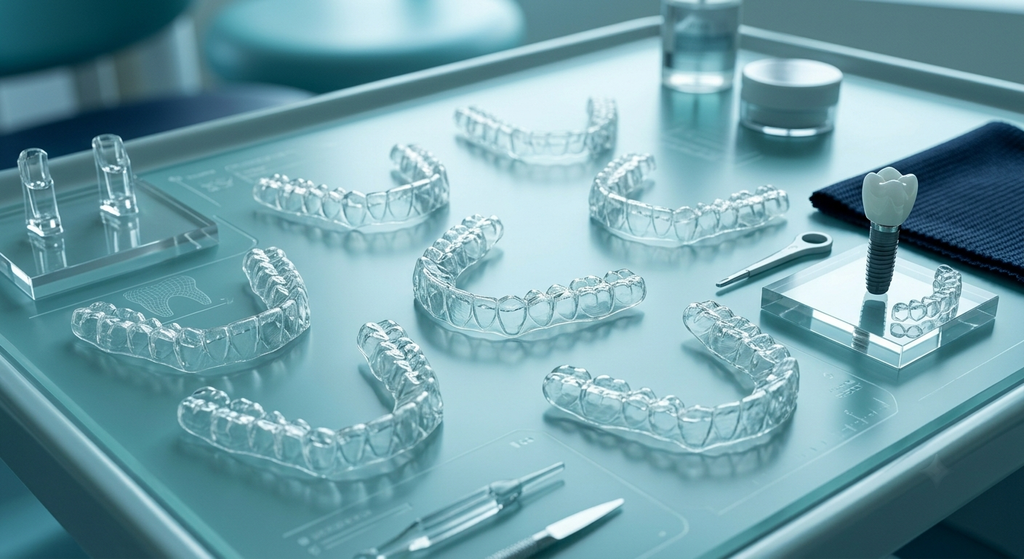
Multiple custom clear aligner trays displayed on a clinical tray alongside orthodontic tools.

Aligners suit a wide range of adults and older teenagers. If you have spacing, crowding, overlapping teeth, or a bite issue such as an open, deep or cross bite, there is a good chance aligners can help, provided your gums and supporting bone are healthy.

The one non-negotiable is commitment. Aligners only move teeth while they are being worn, so a good candidate is someone who can realistically keep the trays in for 20 to 22 hours a day. If you can do that, you are most of the way there. You can read more about how clear aligners work before you decide.

Who is usually better with braces

Clear aligners are not the automatic answer for everyone. Children under 15 are often better suited to conventional braces, because the daily discipline aligners demand is hard to sustain at that age and the jaws are still developing.

Braces are also the stronger choice for developmental or jaw-related problems and for very extensive crowding, where fixed appliances can apply the constant force these cases need. This is not aligners being inferior, simply the right tool for a different job.

When we treat something else first

Sometimes the answer is not aligners or braces yet, but something before either. Active gum disease, significant bone loss, or poor oral hygiene all need attention first, because teeth move through living bone and that foundation has to be sound.

In these situations we are honest with you about what comes first. Occasionally a case is better referred for specialist care, and we will tell you plainly if that is the right path for your health.

It is the dentist who decides, not the patient

This is a point Dr. Rupali Panpate makes with every patient. It is never the patient who decides whether aligners fit, it is always the doctor, based on what the clinical evaluation actually shows.

That protects you. Insisting on aligners for a case that is not suitable is how people end up disappointed or worse off. An honest assessment, even when the answer is not the one you hoped for, is what leads to a result you will be happy with.

Getting ready before treatment begins

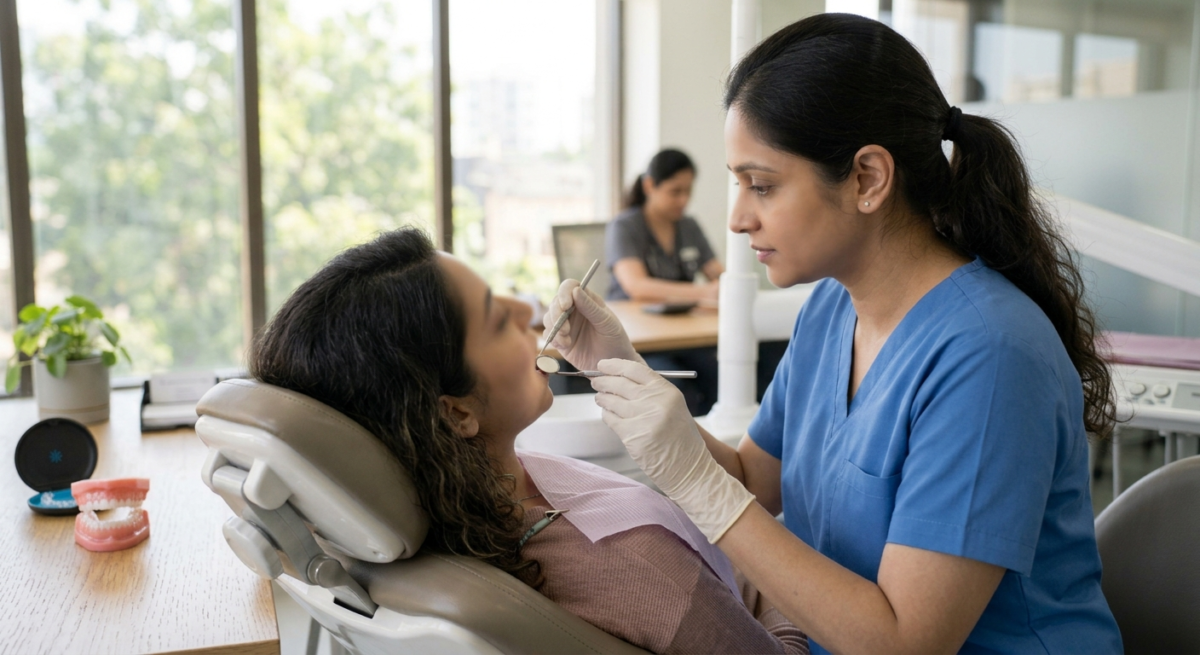
A dental professional selecting periodontal instruments from a tray for a preliminary gum health check.

If you are a candidate, a little preparation makes treatment smoother. Any cavities are filled, a professional cleaning is done if needed, and your gums and hygiene are stabilised before the first tray is made.

Only once that groundwork is in place do we take the records and begin. It is a short step that protects the whole treatment.

Find out if you are a candidate

The only way to know for certain is to have the assessment. It includes a clinical exam, photographs, an OPG X-ray, a lateral cephalogram and a TRIOS 3 digital scan, and you leave with a clear answer on whether aligners or braces suit your case, how long treatment should take, and what it will cost.

Call 097390 62002 to book your assessment at Dr Rupali’s Dental Care and Implant Centre, Kasturi Nagar, Bengaluru, or read what to expect in our guide to the clear aligner journey and about aligner treatment at our clinic.

Frequently Asked Questions

Is there an age limit for clear aligners?

We treat aligner patients roughly between the ages of fifteen and seventy. Teenagers from around fourteen to eighteen are considered case by case, with a look at discipline and parental support, while children under fifteen are usually better suited to conventional braces.

Can I get aligners if I have gum problems?

Not until the gums are healthy. Aligners move teeth through living bone, so active gum disease or significant bone loss must be treated first, and any cleaning, fillings or hygiene work is completed before treatment begins. A healthy foundation is what makes tooth movement safe.

How do you decide if I am suitable?

Suitability comes from a full assessment, not a phone call. Dr. Rupali Panpate examines your teeth, gums and bite, then takes photographs, an OPG X-ray, a lateral cephalogram and a TRIOS 3 digital scan, and only then confirms whether aligners or braces are right for your case.

What if aligners are not right for my case?

You get an honest answer. If your case is better treated with braces, or needs gum treatment or another step first, that is exactly what we recommend. The goal is the right result for your teeth, not fitting every patient into the same treatment regardless of suitability.

Categories
Clear Aligners & Braces

Clear Aligner Cost in Bangalore: The Complete 2026 Guide

Quick Answer

Clear aligner treatment in Bangalore ranges from about Rs 30,000 to Rs 3.5 lakh depending on the system and how complex the case is. At Dr Rupali’s Dental Care and Implant Centre in Kasturi Nagar, DentCare aligner treatment generally ranges from Rs 30,000 to Rs 1.5 lakh or more, Invisalign is priced after assessment, and no-cost EMI is available. The scan and evaluation costs Rs 3,500 to 4,000 and is adjusted against your treatment cost if you proceed.

What Decides the Cost of Aligners?

Every aligner quote comes down to four things: how far your teeth need to move, how many trays that takes, which aligner system you choose, and what is bundled into the price. A small gap that closes in a handful of trays costs a fraction of a full correction that runs through twenty or more. That is why serious clinics quote after a scan, not over the phone: the number of trays is the price, and nobody knows it until your case is planned.

What Aligners Cost Across Bangalore

Market ranges you will see across the city in 2026: All figures vary with the clinic and the case. Treat every range here as a starting point, not a quote.

OptionTypical Bangalore rangeWhat that buys
Online / mail order aligner servicesRs 30,000 – 90,000Trays without in-person examination or monitoring
Indian in-clinic aligner brandsRs 30,000 – 1.5 lakh+Doctor-supervised treatment on locally made systems
InvisalignRs 1 lakh – 3.5 lakh+The premium international system, tiered by case complexity
Conventional bracesRs 40,000 – 90,000Fixed treatment; often cheaper for smaller corrections
Treatment coordinator explaining aligner costs and EMI options to a patient
A dental professional discussing clear aligner and treatment options during a patient consultation.

What Aligners Cost at Our Clinic

ItemCostNotes
DentCare aligner treatmentRs 30,000 – 1.5 lakh+Case dependent; exact plan and price after your scan
Invisalign treatmentPriced after assessmentPremium international system
Scan + complete evaluationRs 3,500 – 4,000Adjusted against treatment cost if you proceed
Review visits during treatmentFreeIncluded in your treatment fee, however many you need
Refinement traysFirst year: no cost or minimal costOur first year refinement policy; minimal charges after

How EMI Works

Clear aligner cost planning at a dental clinic in Kasturi Nagar, Bengaluru
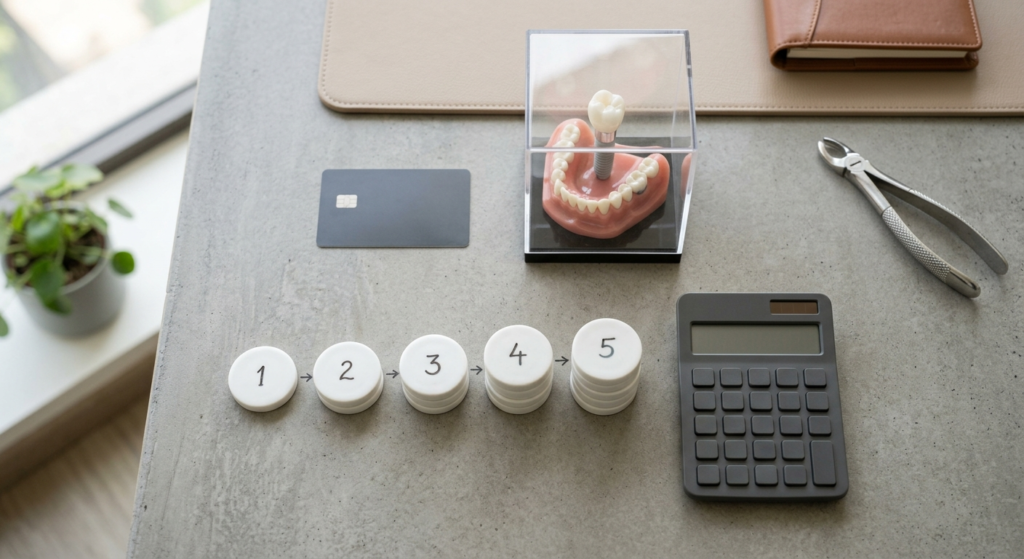
caption-Stacked coins numbered 1 to 5, a credit card, calculator, and dental model illustrating flexible EMI installment payment plans.

Most of our aligner patients pay through EMI, and we keep it simple: 50 to 60 percent of the treatment cost upfront, and the balance in monthly installments, with no-cost EMI available. If a single payment has been holding you back, it does not have to.

Why the Cheapest Quote Is the Wrong Filter

The lowest prices in the aligner market belong to services that skip examination, X-rays and in-person monitoring. Teeth move through living bone, and treatment without diagnosis can cost far more to correct than it saved. Compare what is included, not just the number: who examines you, who monitors progress, what happens if a tooth stops tracking, and whether reviews and refinements are covered. We have written an honest comparison here: in-clinic versus at-home aligners.

Get Your Exact Number

Digital scan and assessment that fixes the exact aligner price
A dentist using an intraoral scanner to perform a 3D digital scan of a patient’s teeth for clear aligners.

One visit answers everything: a clinical exam, X-rays, a TRIOS 3 digital scan, a simulation video of your result, the exact number of trays, the total price and the EMI plan. The Rs 3,500 to 4,000 evaluation fee is adjusted against your treatment if you go ahead.

Call 097390 62002 – Dr Rupali’s Dental Care and Implant Centre, Kasturi Nagar, Bengaluru. Aligner treatment is planned and personally supervised by Dr. Rupali Panpate, an Invisalign approved dentist with more than 110 aligner cases over 12 years. You can also read about aligner treatment at our clinic.

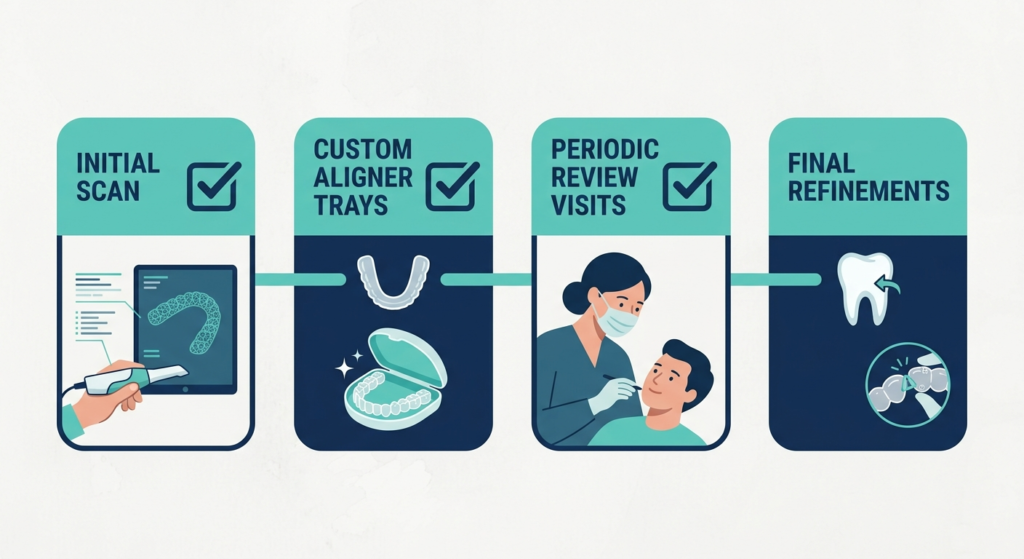
What is included in aligner treatment cost at the clinic
Infographic illustrating the four key steps in clear aligner treatment: initial scan, custom aligner trays, periodic review visits, and final refinements.

Frequently Asked Questions About Aligner Costs

How much do clear aligners cost in Kasturi Nagar?

At our Kasturi Nagar clinic, DentCare aligner treatment generally ranges from Rs 30,000 to Rs 1.5 lakh or more depending on the case, and Invisalign is priced after assessment. The scan that fixes your exact price costs Rs 3,500 to 4,000 and is adjusted against treatment.

Why is the price range so wide?

Because the number of trays is the price. A minor correction may need a handful of trays; a complex case may need twenty or more, and the system you choose also matters.

Is EMI available for aligners?

Yes. Typically 50 to 60 percent upfront and the balance in monthly installments, with no-cost EMI available.

Is the consultation fee extra?

The scan and evaluation costs Rs 3,500 to 4,000, and the full amount is adjusted against your treatment cost if you proceed. Review visits during treatment are free.

Are aligners more expensive than braces?

Usually yes for comparable cases – aligners sit in the premium bracket, while braces are often cheaper for smaller corrections. The full comparison: Invisalign versus braces in Bengaluru.