 Skip to the content
Key Takeaways
- Clear aligners can treat open, deep and closed bites in suitable cases, once a dentist confirms the cause.
- Mild to moderate bites that sit in the teeth respond best to clear aligners.
- Bites rooted in the jaw usually need braces, and severe cases may need surgery first.
- An OPG X-ray and lateral cephalogram show whether the problem is in the teeth or the jaw.
- Bite correction often needs refinement trays, so progress is reviewed step by step.
- Retainers are mandatory afterwards, because a corrected bite can drift back without them.
A bite problem, called malocclusion, is a mismatch in how your upper and lower teeth meet when you close your mouth. Open bite, deep bite and closed bite are three common versions, and clear aligners can treat all three in many adults and older teenagers.
The key word is suitable. Whether aligners work for you depends on whether the problem sits in the teeth or in the jaw, and that is decided by an assessment, not by a photo or an online quiz.
What open, deep and closed bites actually are
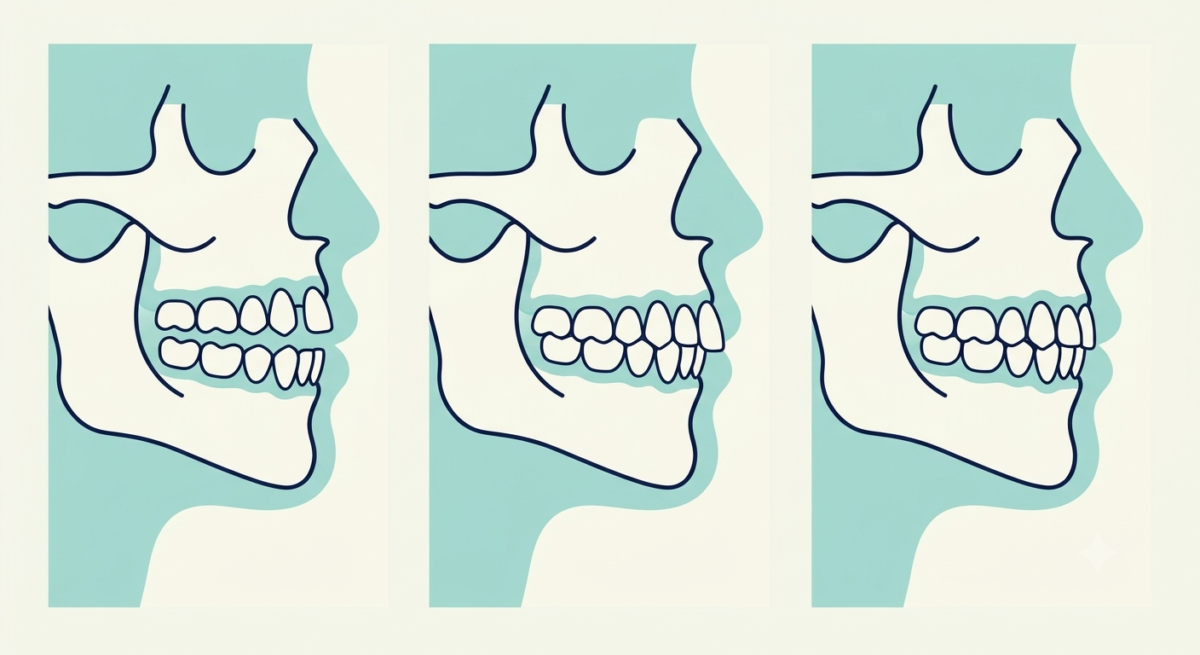
An open bite means your front teeth do not touch when you close your mouth, leaving a gap between the top and bottom front teeth. Childhood thumb sucking, long pacifier use and a tongue thrust are common causes.
A deep bite means the upper front teeth cover too much of the lower ones. Many patients call this a closed bite, and the medical term is a deep overbite, as Cleveland Clinic explains.
| Bite type | What you notice | Can clear aligners help? | When braces or a specialist come first |
| Open bite | Front teeth do not meet when the mouth is closed | Often, when mild to moderate and caused by the teeth or a habit | Jaw-related open bites, or a habit that continues |
| Deep bite | Upper front teeth cover too much of the lower teeth | Often, when the cause is in the teeth | Jaw-related deep bites |
| Closed bite | Everyday name for a deep bite | Same as a deep bite | Same as a deep bite |
| Jaw-related bite | Face or profile looks out of balance | Not on their own | Braces, or surgery first for severe cases |
Can aligners fix an open bite?
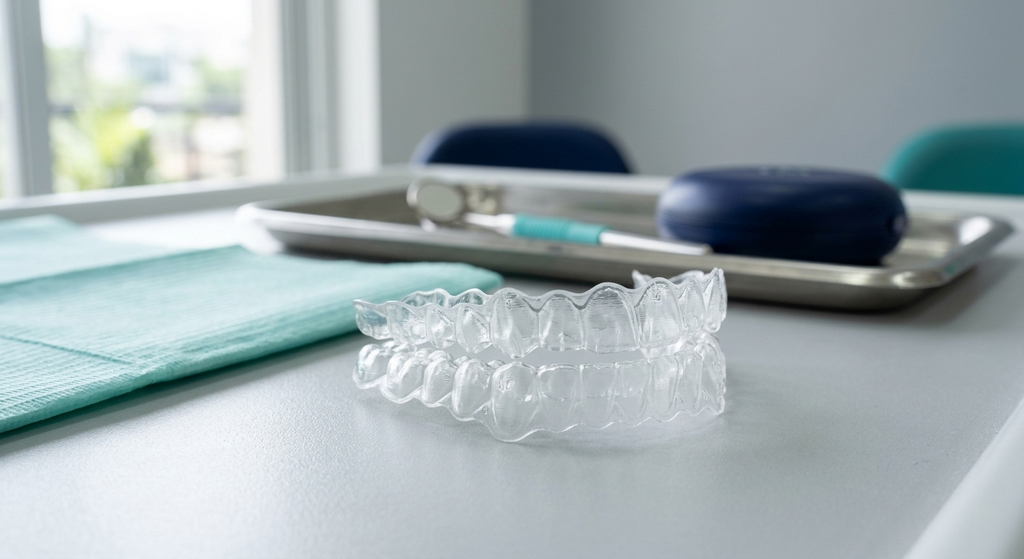
Yes, in many mild to moderate cases. Aligners close an open bite mainly by moving the front teeth so the upper and lower teeth meet. A 2025 scoping review of adult patients reported bite improvements of roughly 2.3 to 3.4 millimetres across several studies, which is why the size of the gap matters so much.
The same review notes that treatment often uses extra aids and needs refinements, so a good plan always includes regular reviews. If a habit such as tongue thrust caused the gap, it has to be corrected too, or the teeth can drift open again.
Can aligners fix a deep bite or closed bite?
Often, yes, when the deep bite is in the teeth rather than the jaw. A 2025 systematic review in Clinical Oral Investigations found that clear aligners can correct mild to moderate dental deep bites, but are less effective than braces for skeletal ones.
The same review found that the correction planned on screen often falls short of what is achieved, and it rated the evidence as low quality. That is why honest planning leaves room for refinement trays, and why a dentist should tell you what is realistic before you start.
When braces or a specialist should come first
If the jaw itself is the cause, aligners alone will not solve it. Signs include a face or profile that looks out of balance, or a lower jaw sitting noticeably forward or back. Braces are the usual route here, and our clinic offers braces with visiting orthodontists once the case is confirmed.
Very severe jaw cases can need surgery first, and these are referred for specialist care. Gum disease or heavy bone loss must also be treated before any teeth are moved, as set out in our guide to who can get clear aligners.
Children under 15 are usually better suited to braces as well. Our guide to clear aligners for teens explains where that line is drawn.
How Dr. Rupali Panpate decides if your bite suits aligners
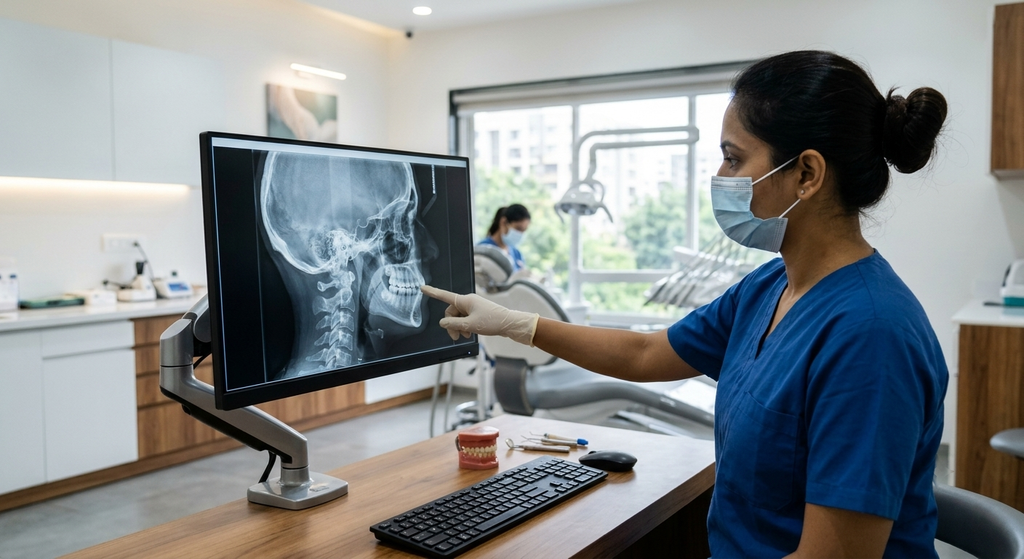
At our Kasturi Nagar clinic, Dr. Rupali Panpate plans and manages every aligner case personally. She starts with a clinical exam and photographs, then takes an OPG X-ray and a lateral cephalogram, which together show whether the bite problem is in the teeth or the jaw.
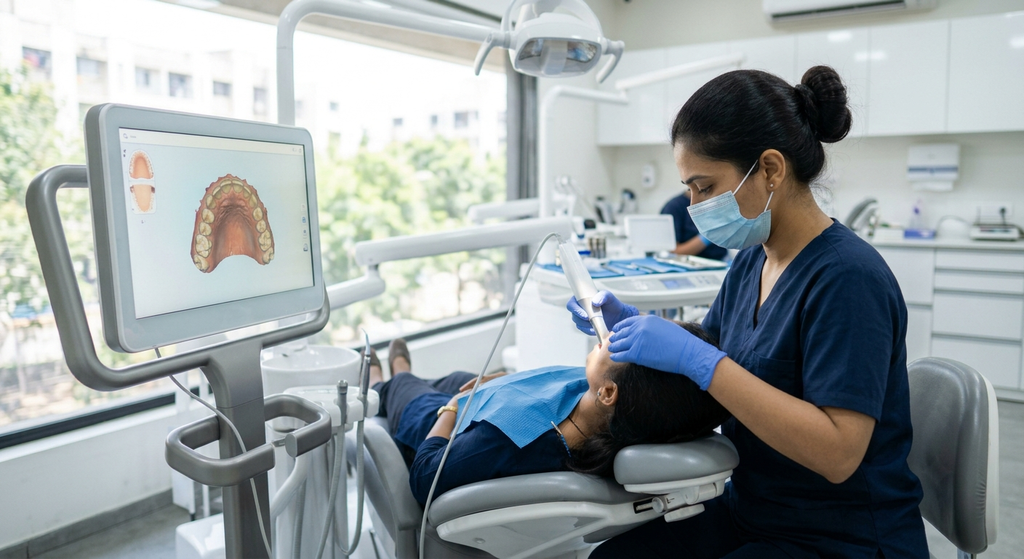
A TRIOS 3 digital scan follows, and you see a simulation video of the expected result before you commit. It is always the dentist who decides whether aligners fit, never the patient, because the wrong choice costs time and money. The full sequence is in our guide to the clear aligner journey.
What to expect during bite treatment
Bite correction is more demanding than closing a small gap, so expect regular reviews. Review visits during treatment are free, and refinement trays within the first year are provided at no or minimal cost under our refinement policy.
Clear aligner treatment generally runs 2 to 9 months, and your own timeline is confirmed after the simulation. Retainers are mandatory afterwards, because a corrected bite can slowly drift back, as we explain in retainers after aligners.
For what treatment costs, see our guide to clear aligner cost in Bangalore.
As Verified By
- Cleveland Clinic’s guide to malocclusion types and treatment defines open bite, overbite, crossbite and underbite.
- A 2025 scoping review in Medicina covers clear aligners for anterior open bite in adult patients.
- A 2025 systematic review in Clinical Oral Investigations covers the effectiveness and accuracy of clear aligners in deep bite.
Check your bite before you decide
If you think you have an open, deep or closed bite, a short assessment gives you a clear answer on whether aligners or braces suit you, how long treatment should take and what it will cost.
Call 097390 62002 or book an appointment at Dr Rupali’s Dental Care and Implant Centre, Kasturi Nagar, Bengaluru. You can also read about aligner treatment at our clinic or visit our Kasturi Nagar clinic page.
Frequently Asked Questions
Can clear aligners fix an open bite?
In many mild to moderate cases, yes. Aligners usually close an open bite by moving the front teeth so the upper and lower teeth meet.
If the cause is the jaw, or a habit such as tongue thrust continues, braces or habit correction may be needed first.
Can clear aligners correct a deep bite or closed bite?
Often, when the problem is in the teeth rather than the jaw. Research shows mild to moderate deep bites can be corrected with aligners, though the result achieved can fall short of the plan on screen.
Refinement trays are therefore a normal part of the process.
How do I know if my bite problem is in my teeth or my jaw?
Only an assessment can tell you. Dr. Rupali Panpate uses a clinical exam, photographs, an OPG X-ray and a lateral cephalogram, which shows the profile of your jaws and teeth.
This is why we never confirm suitability over the phone.
Will my bite go back after aligner treatment?
It can, which is why retainers are mandatory. Teeth tend to drift toward their old positions after treatment, and a corrected bite is no exception.
Wearing your retainers as advised is what keeps the new bite stable.
Are braces better than clear aligners for bite problems?
Neither is simply better. Aligners suit mild to moderate bites that sit in the teeth, while braces are usually the stronger choice for jaw-related bites, younger children and very complex cases.
The assessment decides which fits your case.