
Categories
Clear Aligners & Braces

Braces Cost in Bangalore: What Conventional Braces Cost in 2026

Key Takeaways

  • Conventional braces in Bangalore are commonly quoted from about Rs 25,000 to Rs 90,000, depending on type and case.
  • Ceramic and lingual braces usually cost more than metal braces.
  • The braces type, case complexity and treatment length set the price.
  • Braces treatment generally runs 1 to 1.5 years.
  • Braces are often cheaper than clear aligners for smaller corrections.
  • Retainers are mandatory after braces, so ask whether a quote includes them.

Braces cost in Bangalore depends mainly on the type of braces, how complex your case is and how long treatment takes. Conventional braces are fixed brackets joined by a wire, and they move teeth steadily over roughly 1 to 1.5 years.

Quotes across the city vary widely, so a single number can mislead. This guide explains the typical ranges, what moves the price up or down, and what a fair quote should include.

What conventional braces cost in Bangalore

Typical market ranges for fixed braces in Bangalore run from the tens of thousands for simple metal braces to over a lakh for lingual braces. Treat the figures below as starting points rather than firm quotes, because clinic, case and brand all change the final price.

Metal braces are the baseline most quotes start from. Ceramic braces usually add a materials premium, and lingual braces sit at the top of the fixed-braces range. Clear aligners appear in the last row because many patients weigh the two options together.

OptionTypical Bangalore rangeWhat that buys
Metal bracesRs 25,000 – 90,000Stainless steel brackets and wire; the most visible and often the lowest cost
Ceramic bracesRs 35,000 – 90,000Tooth-coloured brackets; less noticeable and more fragile
Lingual bracesRs 60,000 – 1.2 lakh+Brackets fixed behind the teeth, hidden from view
Clear aligners (for comparison)Rs 30,000 – 3.5 lakh+Removable trays; priced by system and case

The aligner range runs from Indian in-clinic brands at the lower end to Invisalign at the top, as our guide to clear aligner cost in Bangalore sets out.

What decides the price of braces

Four things set the price of any braces quote: the type of braces, how far your teeth need to move, how long treatment runs, and who treats you. A small gap closed in a few months costs a fraction of a full correction that takes the whole 1 to 1.5 years.

Follow-up matters too. Braces need regular visits for adjustments, so check whether those visits are included in the price or charged each time. A low headline price can hide a long list of extras, and a treatment that runs the full 1.5 years needs more visits than one that finishes in 12 months.

Ceramic braces can cost more than metal because of the materials, and the American Association of Orthodontists adds that cost also depends on complexity, location and the practice.

Types of braces and what they mean for cost
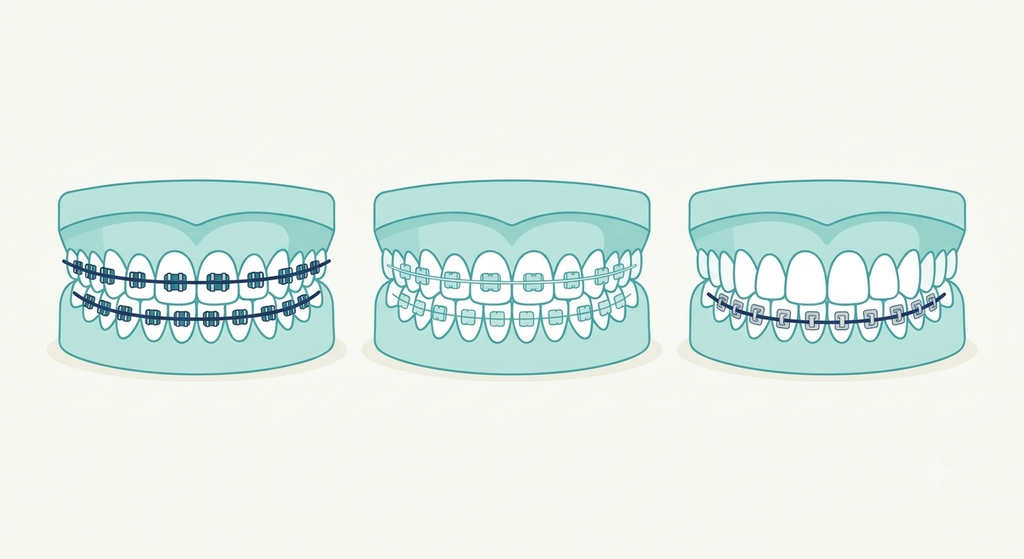
Metal, ceramic and lingual braces compared side by side
Side-by-side comparison illustrating traditional metal braces, tooth-colored ceramic braces, and lingual braces on dental models.

Cleveland Clinic describes four main fixed types. Which one suits you is confirmed at your assessment.

  • Metal braces: stainless steel brackets and wire. They are the most visible, and usually the lowest cost.
  • Ceramic braces: tooth-coloured parts that blend in, but they are more fragile than metal.
  • Lingual braces: fixed behind the teeth so they are hidden, and usually the highest cost.
  • Self-ligating braces: they look like metal braces but use a built-in clip instead of elastic ties.

Braces or aligners: which costs less?
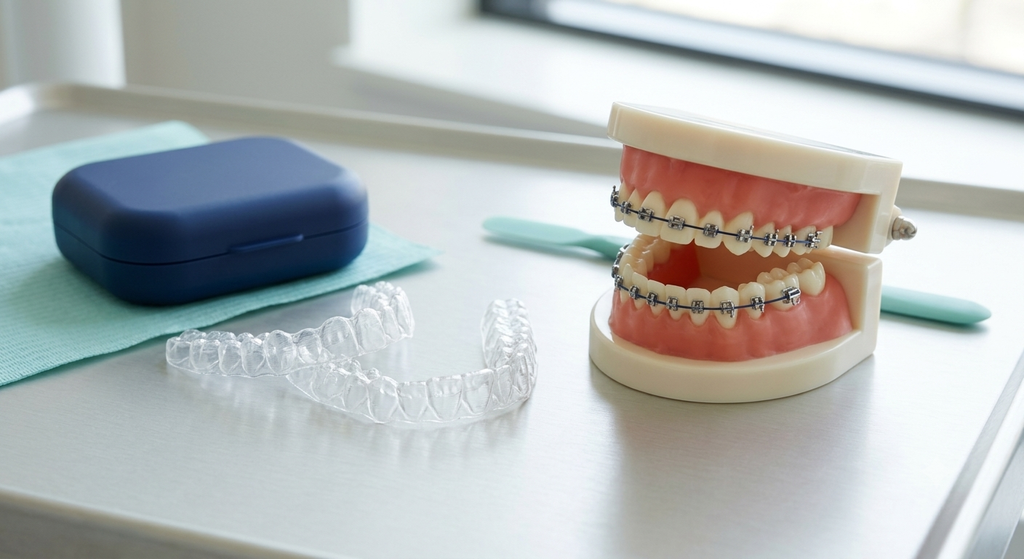
Braces and clear aligners shown side by side for a cost comparison
Clear aligner trays displayed alongside a brace-fitted dental jaw model on a clinical tray.

Braces are often cheaper for smaller corrections, while clear aligners sit in the premium bracket for longer treatments. Neither is simply better value, because the right choice depends on your case, your age and how reliably you could wear removable trays.

Aligners need 20 to 22 hours of wear a day, but braces work around the clock without any effort from you. That is why braces suit children, low-discipline patients and some complex cases well, as set out in our guide to who can get clear aligners.

When braces are the better choice anyway

Braces are the usual recommendation for children under 15, for jaw-related or developmental problems and for very extensive crowding. In those cases the cost question is secondary, because the right treatment protects the result.

Braces also ask nothing of your daily routine, which is why they suit patients who struggle with discipline. Our guide to clear aligners for teens explains where the age line sits.

How braces are assessed and delivered at our clinic

At our Kasturi Nagar clinic, Dr. Rupali Panpate assesses your case first and tells you plainly whether braces or aligners suit you. Braces are delivered with our visiting orthodontists once the case is confirmed.

Braces treatment generally runs 1 to 1.5 years, and the exact timeline depends on your teeth. The exact price depends on the type of braces and the complexity of your case, so a reliable figure follows the assessment.

What a good braces quote should include
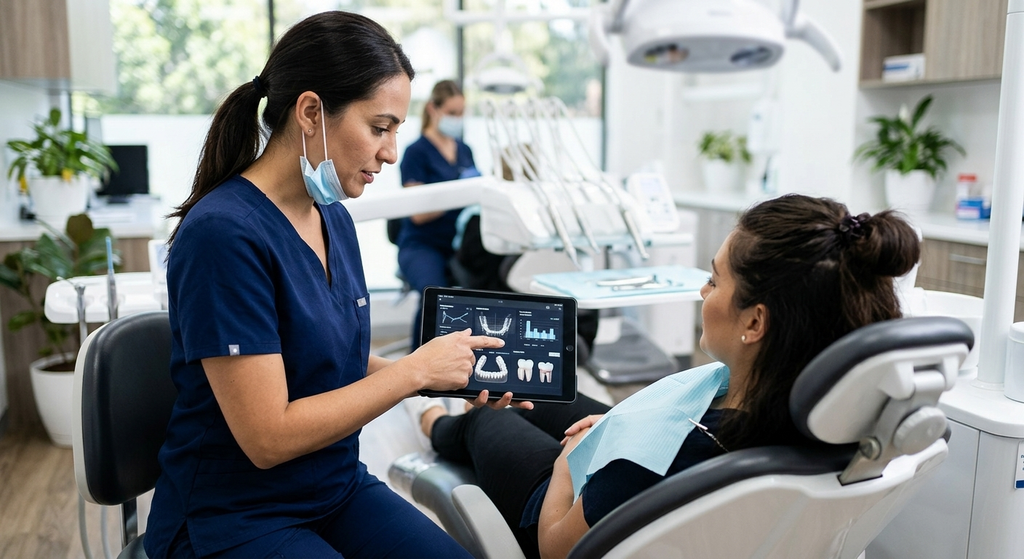
Dentist reviewing a braces treatment plan and quote with a patient
caption-Dentist explaining a digital dental treatment plan on a tablet to a patient in a modern clinic chair.

A fair quote lets you compare clinics on equal terms. Ask each clinic for these points:

  • The type of braces and how many months treatment is expected to take.
  • Whether adjustment visits are included or charged separately.
  • Whether retainers are included, because they are mandatory afterwards.
  • Whether X-rays, repairs and extra visits cost extra.
  • The payment terms, stated clearly.

The retainer rule is the same one we explain in retainers after aligners: without a retainer, teeth drift back.

As Verified By

Get your braces quote

The only way to get a real number is an assessment, where you learn whether braces or aligners suit your case, how long treatment should take and what it will cost. There is no substitute for seeing your teeth, because two people with the same complaint can need very different treatment.

Call 097390 62002 or book an appointment at Dr Rupali’s Dental Care and Implant Centre, Kasturi Nagar, Bengaluru. You can also read about aligner treatment at our clinic or visit our Kasturi Nagar clinic page.

Frequently Asked Questions

How much do braces cost in Bangalore?

Published ranges for conventional metal braces in Bangalore run from about Rs 25,000 to Rs 90,000, with ceramic and lingual braces costing more. The final figure depends on the type of braces, how complex your case is and the clinic.

A reliable price comes only after an assessment, not from a phone call.

Are braces cheaper than clear aligners?

Often, for smaller corrections. Braces are usually cheaper when the correction is minor, while clear aligners sit in the premium bracket for longer treatments.

The better value depends on your case, your age and how reliably you could wear removable trays, so the dentist’s assessment should decide.

Why do braces quotes differ so much between clinics?

Quotes differ because the type of braces, the treatment length, the number of included visits and the clinician all vary. One quote may include retainers and adjustments, while another charges for them separately.

Compare what is included, not just the headline number.

How long do braces take, and does that change the cost?

Conventional braces generally take 1 to 1.5 years, depending on how far your teeth need to move. A longer treatment usually means more adjustment visits and a higher total price.

Your own timeline is confirmed after the assessment.

Do I need to pay extra for retainers after braces?

Retainers are mandatory after braces, because teeth drift back toward their old positions without them. Ask every clinic whether the quote includes them.

At our clinic, retainers are discussed as part of your treatment plan.
Categories
Clear Aligners & Braces

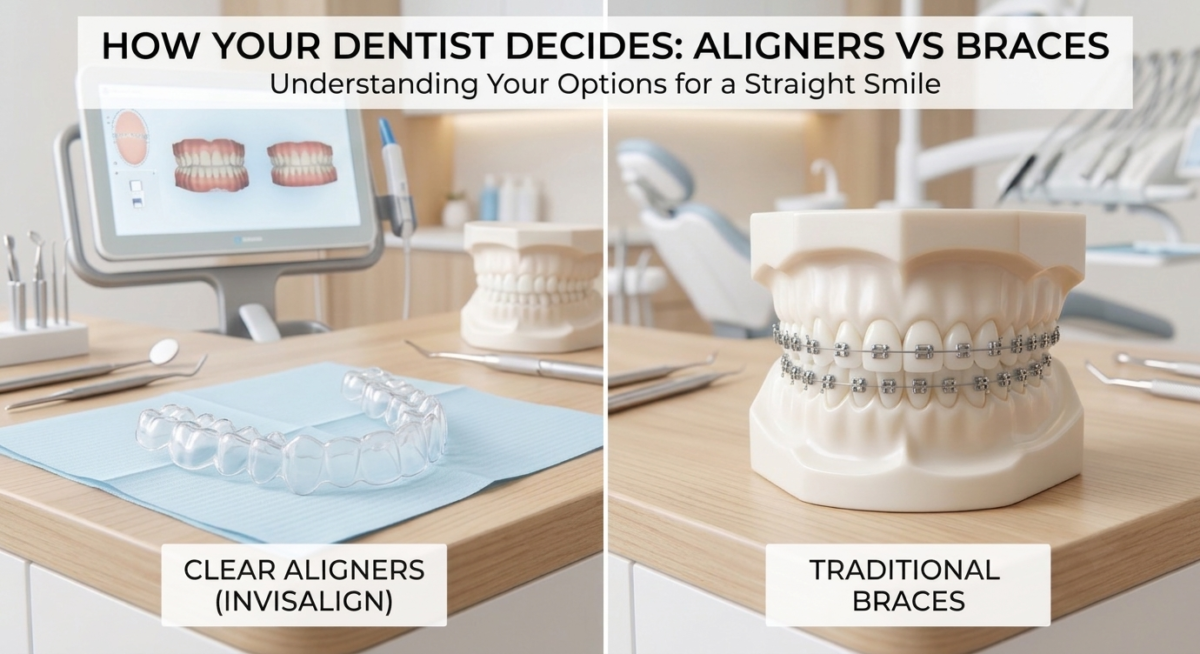
Aligners vs Braces: How a Dentist Actually Decides Which Is Right for You

Aligners vs braces is the first question most patients ask when they decide to straighten their teeth. Both treatments correct malocclusion, which is the misalignment of teeth or bite. Clear aligners are transparent, removable trays changed in a numbered sequence. Conventional braces are fixed brackets and wires bonded to the teeth for the full treatment period.

Research comparing the two finds that both work. A meta-analysis of clinical studies found clear aligners shorten treatment duration and move teeth in controlled segments, while conventional braces remain stronger for complex bite correction, torque control and retention. In practice, the deciding factors are the type of correction needed, the patient’s age, daily discipline and budget.

At Dr. Rupali’s Dental Care and Implant Centre in Kasturi Nagar, Bengaluru, the choice is made through a structured evaluation: eight to ten photographs, an OPG X-ray, a lateral cephalogram and a 3D scan. Dr. Rupali Panpate, an Invisalign approved doctor with more than 110 aligner cases over 12 years, treats aligner patients from 15 to 70 years of age. This article explains the exact framework she uses, so you know what to expect before your consultation.

Key Takeaways

  • Both clear aligners and conventional braces correct crowding, spacing and bite problems effectively.
  • Clear aligners suit adults and image-conscious professionals; typical course runs 6 to 7 months.
  • Conventional braces are preferred for children below 15 and developmental jaw problems.
  • Aligners demand 20 to 22 hours of daily wear; braces need no daily discipline.
  • Aligners cost more for long treatments; braces are cheaper for minor corrections.
  • The decision follows X-rays, a 3D scan and clinical evaluation, never patient preference alone.

What Are Clear Aligners and Conventional Braces?

Clear aligners are a series of custom-made, transparent trays produced from a 3D scan of your teeth. Each numbered tray is worn for around 7 or 10 days, depending on the patient’s preferred plan, and moves your teeth a small step before you switch to the next one.

You remove them to eat and brush, then wear them back, keeping total wear at 20 to 22 hours a day. In the case of aligners, the biggest advantage is that there is no pricking of wires against the gums and tissues in the oral cavity. In the case of conventional braces, the fear of wire pricks is always present.

Conventional braces take the opposite approach. Metal or ceramic brackets are bonded to each tooth and connected with an archwire, which your dentist tightens at review visits. Because braces are fixed, they work around the clock without depending on your daily routine.

Both systems apply controlled pressure to move teeth through bone. The difference is not the biology. It is how each system fits your case, your age and your life. The clear aligners service page covers the aligner process in full detail.

Aligners vs Braces: Key Treatment Attributes

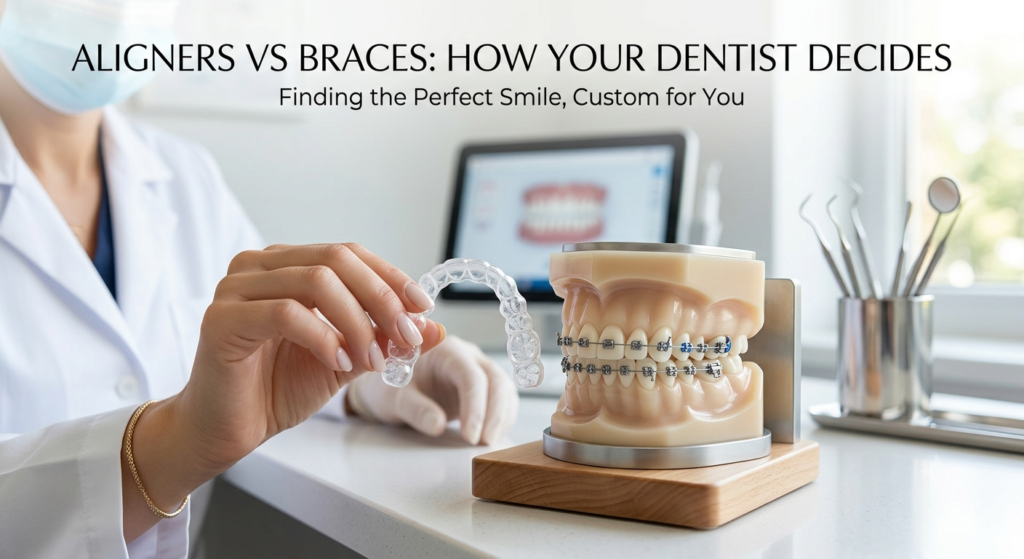
Clear aligner tray and conventional braces side by side
Dentist comparing a clear aligner tray with a brace-fitted dental model during consultation.
AttributeClear AlignersConventional Braces
VisibilityNearly invisibleVisible brackets and wires
RemovableYes, for meals and brushingNo, fixed until treatment ends
Typical duration (mild to moderate cases)6 to 7 monthsLonger, varies by case
Daily discipline needed20 to 22 hours wear, tray changes every 10 daysNone, appliance works continuously
Food restrictionsNoneHard and sticky foods restricted
Best suited age15 to 70 yearsAll ages, preferred below 15
Complex jaw correctionsNot suitableSuitable, sometimes with surgery
Cost positionPremium for longer treatmentsLower for minor corrections

When Clear Aligners Are the Better Choice

Clear aligners are the stronger option for most working adults with mild to moderate corrections. They fit patients whose appearance matters during treatment, such as professionals in client-facing roles and frequent video meetings. Modern aligners handle spacing, crowding, overlapping teeth, Class 1 and Class 2 malocclusions, open bites and deep bites. Clinical research confirms aligners produce shorter treatment times in non-extraction cases of this kind, which is why a typical course at Dr. Rupali’s Dental Care and Implant Centre runs 6 to 7 months.

The lifestyle argument is real, not cosmetic vanity. There are no wires to catch food, no restrictions on what you eat, and cleaning your teeth stays exactly as easy as before treatment. For patients who maintain gum health during orthodontic work, removability is a genuine clinical advantage, and research links aligners to better periodontal health during treatment.

One condition applies. Aligners only work while they are on your teeth. Miss the 20 to 22 hour daily target repeatedly and the treatment stalls. That trade-off is covered in the discipline section below, because it decides more cases than most patients expect.

When Conventional Braces Are the Better Choice

Conventional braces win in three specific situations, and the first is age. Children below 15 years generally do better with braces, because aligner treatment depends on a daily routine of wear hours and scheduled tray changes that young children find hard to sustain. A fixed appliance removes that risk entirely, which is why it remains the default for developing-age patients. Parents comparing options for younger children can read about the clinic’s kids dental treatment services as the starting point.

The second situation is developmental jaw problems. When the jaw itself has not grown into the correct position, no tray system can fix the foundation. These cases need conventional orthodontic treatment, sometimes with surgical correction first, before any cosmetic alignment is considered.

Systematic reviews of severe malocclusion cases reach the same conclusion: fixed appliances retain the advantage in complex corrections. This is a hard clinical boundary, not a preference.

The third situation is budget with a minor correction. For small spacing or limited crowding, braces can finish the job at a lower cost, while aligners sit in the premium bracket for longer treatments. When the correction is small and the budget is tight, braces are the honest recommendation.

How Dr. Rupali Panpate Decides: The Evaluation Process

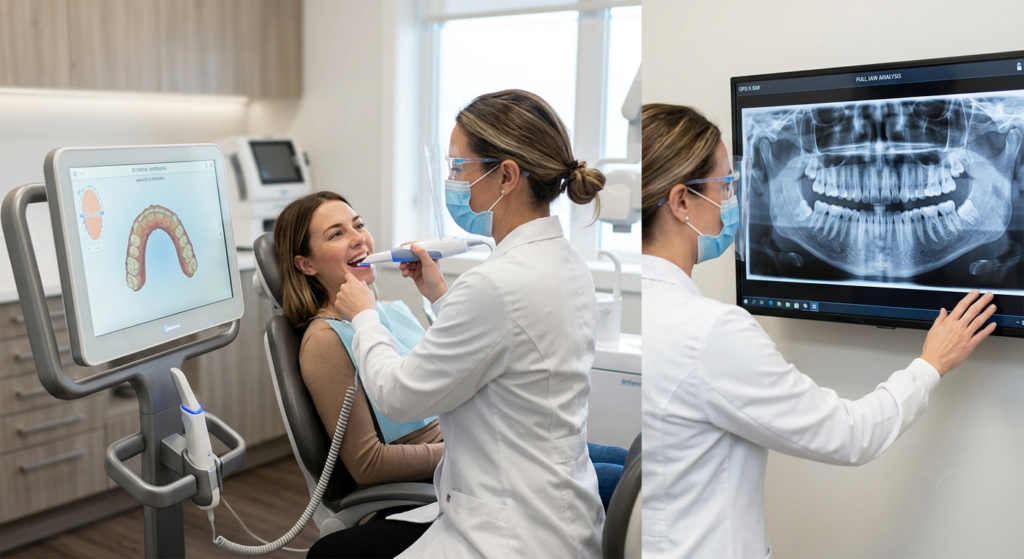
3D dental scan and X-ray evaluation before choosing aligners or braces
Dentist performing a 3D intraoral scan and evaluating a digital panoramic X-ray for orthodontic treatment.

To recap the comparison so far: aligners vs braces is not a question of which is better overall. Clear aligners suit disciplined adults with mild to moderate corrections who value invisibility and comfort. Conventional braces suit children below 15, developmental jaw problems and budget-limited minor corrections. At Dr. Rupali’s Dental Care and Implant Centre, the final call comes from a structured evaluation, and the sections below cover cost, discipline and the questions patients ask most.

The evaluation itself follows a fixed sequence. First, a discussion of what bothers you and what result you expect, with actual aligner samples shown in the clinic. Second, a gum and hygiene check, because active gum disease or heavy bone loss rules out tooth movement until treated. Cases needing gum work are handled through painless laser gum treatment first, and wisdom teeth are assessed for extraction where they interfere.

Then come the records: eight to ten photographs, an OPG X-ray, a lateral cephalogram and a 3D scan of every tooth. The scan generates a simulation video showing your projected result from four views before you commit to anything. Only after all of this does Dr. Rupali Panpate recommend aligners or braces. As she puts it: it is never the patient who decides, it is always the doctor who decides, based on what the evaluation shows.

Cost Comparison: Aligners vs Braces in Bangalore

Aligners cost more than braces for comparable long treatments, and any honest comparison starts there. The gap narrows for small corrections, where braces can be cheaper outright. Exact treatment cost depends on the number of trays or the appliance type your case needs, which is why no serious quote is given before records are taken. At Dr. Rupali’s Dental Care and Implant Centre, the scanning and complete evaluation costs Rs. 3,500 to 4,000, and this amount is adjusted against your treatment cost if you proceed.

Payment structure matters as much as the headline number. Most aligner patients at the clinic use an EMI plan: part payment upfront, the balance in monthly installments. Every review visit during treatment is free, already included in the treatment fee.

Aligner treatment also comes with a first-year refinement policy. If your teeth shift within that period, refinement trays are arranged at no cost or minimal cost. Refinements after the first year are still offered at minimal charges, which protects the value of what you paid.

Discipline: The Deciding Factor Most Patients Underestimate

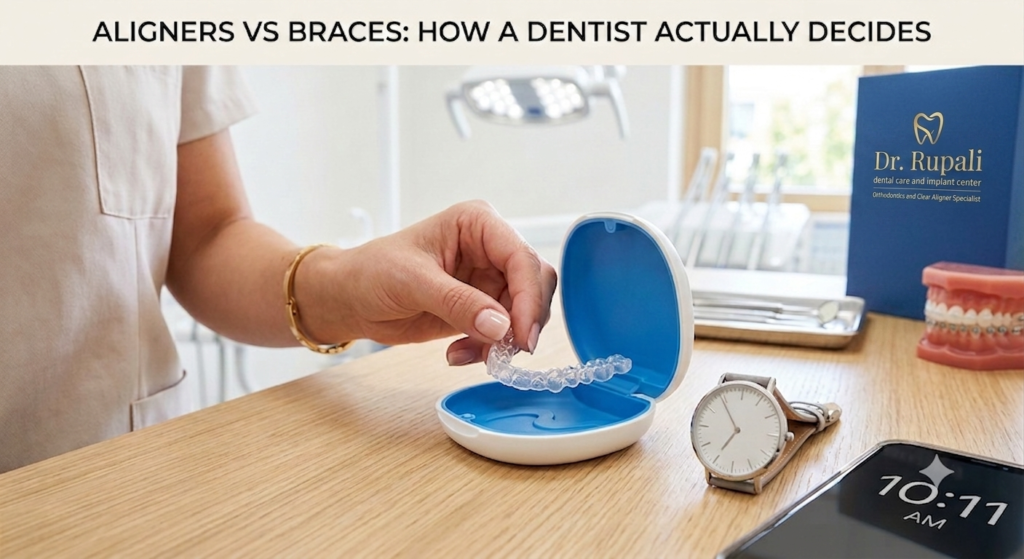
Clear aligners require 20 to 22 hours of daily wear
A clear aligner tray being placed in its protective case next to a watch and phone, illustrating daily wear-time discipline.

Discipline decides more aligner cases than tooth position does, and patients rarely expect that. Aligners must stay on your teeth 20 to 22 hours a day, with trays changed on schedule roughly every 10 days. A tray worn too few hours will not complete its movement, and the next tray will not seat properly until the current one has done its work. Patients who cannot hold that routine are advised against spending on aligners, however suitable their teeth may be.

The clinic builds a safety net around this. Every 10th day, the team calls active aligner patients to confirm they have moved to the next tray on time. If you miss wear hours, the fix is simple and honest: wear the same tray 2 to 3 extra days to complete its hours before moving on.

Braces ask nothing of your routine. They work continuously whether you think about them or not, which is exactly why they suit children and low-discipline patients better. With conventional braces, a clinic visit every month is important for tightening or changing the wires. Otherwise the braces stop working, so monthly evaluation is very important. Teenagers between 14 and 18 sit in the middle: at Dr. Rupali’s Dental Care and Implant Centre they are assessed together with their parents before aligners are approved. This framework applies at every stage of life from 15 to 70, and the Kasturi Nagar clinic evaluates each case individually.

As Verified By

Independent clinical research supports the framework described in this article:

Frequently Asked Questions

Are clear aligners as effective as braces?

For mild to moderate corrections, yes. Clinical research shows both systems treat crowding, spacing and common bite problems effectively, and aligners often finish faster in these cases.

For complex corrections involving jaw position or severe malocclusion, braces remain more effective. The evaluation X-rays show which category your case falls into.

Which treatment is faster, aligners or braces?

For mild to moderate cases, clear aligners are usually faster. A typical aligner course at Dr. Rupali’s Dental Care and Implant Centre runs 6 to 7 months, and studies confirm shorter durations in non-extraction cases.

Complex cases take longer with either system. Your timeline is confirmed after the 3D scan and X-ray evaluation, not before.

Are aligners more expensive than braces in India?

For longer treatments, yes. Aligners sit in the premium bracket, while braces cost less for minor corrections.

The gap is managed through EMI plans: part payment upfront and the balance in monthly installments. The Rs. 3,500 to 4,000 scanning and evaluation fee is adjusted against your treatment cost if you proceed.

Do aligners hurt less than braces?

Generally, yes. Aligners apply gentle, gradual pressure, and most patients feel only mild tightness for a day or two after each new tray.

Braces involve brackets and wires that can irritate the cheeks and cause an ache after each adjustment visit. Neither treatment involves sharp or lasting pain.

Can teenagers get aligners instead of braces?

Sometimes. At Dr. Rupali’s Dental Care and Implant Centre, teenagers between 14 and 18 are assessed along with their parents before aligners are approved, because the treatment is expensive and depends on daily discipline.

Children below 15 are generally guided to conventional braces, which do not depend on a daily wear routine.

Can I switch from braces to aligners midway?

In selected cases, yes, but it needs a fresh evaluation. New records, a new 3D scan and a new treatment plan are required, because the two systems plan tooth movement differently.

Whether switching makes sense depends on how much correction remains and why you want to change. Discuss it openly at a review visit rather than stopping treatment on your own.

What happens at the consultation before choosing?

The full evaluation sequence: a discussion of your expectations, a gum and hygiene check, eight to ten photographs, an OPG X-ray, a lateral cephalogram and a 3D scan. You then see a simulation video of your projected result from four views.

Only after this does Dr. Rupali Panpate recommend aligners or braces for your case. The scanning and evaluation costs Rs. 3,500 to 4,000, adjusted against treatment if you proceed.

The Right Choice Is the One Your Evaluation Supports

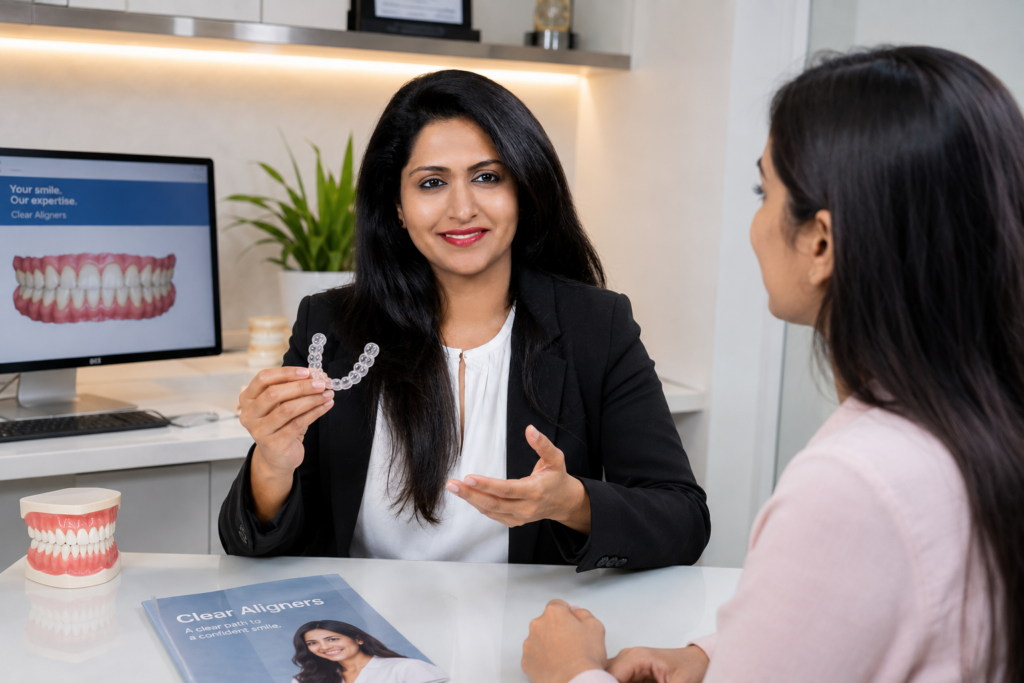
Dr. Rupali Panpate explains aligners vs braces to a patient in Kasturi Nagar
Dr. Rupali Panpate holding a clear aligner tray while explaining treatment options to a patient during consultation.

Aligners vs braces has no universal winner. Clear aligners reward disciplined adults with mild to moderate corrections: nearly invisible, removable, typically done in 6 to 7 months. Conventional braces remain the right call for young children, developmental jaw problems and tight budgets on small corrections.

What separates a good outcome from a wasted spend is not the appliance. It is matching the appliance to the case, which is exactly what the evaluation exists to do.

Dr. Rupali Panpate has treated more than 110 aligner cases over 12 years at Dr. Rupali’s Dental Care and Implant Centre, Kasturi Nagar, Bengaluru, alongside the full range of dental services. To find out which treatment your teeth actually need, call 097390 62002 or book your appointment online.

Categories
Clear Aligners & Braces

Clear Aligner Cost in Bangalore: The Complete 2026 Guide

Quick Answer

Clear aligner treatment in Bangalore ranges from about Rs 30,000 to Rs 3.5 lakh depending on the system and how complex the case is. At Dr Rupali’s Dental Care and Implant Centre in Kasturi Nagar, DentCare aligner treatment generally ranges from Rs 30,000 to Rs 1.5 lakh or more, Invisalign is priced after assessment, and no-cost EMI is available. The scan and evaluation costs Rs 3,500 to 4,000 and is adjusted against your treatment cost if you proceed.

What Decides the Cost of Aligners?

Every aligner quote comes down to four things: how far your teeth need to move, how many trays that takes, which aligner system you choose, and what is bundled into the price. A small gap that closes in a handful of trays costs a fraction of a full correction that runs through twenty or more. That is why serious clinics quote after a scan, not over the phone: the number of trays is the price, and nobody knows it until your case is planned.

What Aligners Cost Across Bangalore

Market ranges you will see across the city in 2026: All figures vary with the clinic and the case. Treat every range here as a starting point, not a quote.

OptionTypical Bangalore rangeWhat that buys
Online / mail order aligner servicesRs 30,000 – 90,000Trays without in-person examination or monitoring
Indian in-clinic aligner brandsRs 30,000 – 1.5 lakh+Doctor-supervised treatment on locally made systems
InvisalignRs 1 lakh – 3.5 lakh+The premium international system, tiered by case complexity
Conventional bracesRs 40,000 – 90,000Fixed treatment; often cheaper for smaller corrections
Treatment coordinator explaining aligner costs and EMI options to a patient
A dental professional discussing clear aligner and treatment options during a patient consultation.

What Aligners Cost at Our Clinic

ItemCostNotes
DentCare aligner treatmentRs 30,000 – 1.5 lakh+Case dependent; exact plan and price after your scan
Invisalign treatmentPriced after assessmentPremium international system
Scan + complete evaluationRs 3,500 – 4,000Adjusted against treatment cost if you proceed
Review visits during treatmentFreeIncluded in your treatment fee, however many you need
Refinement traysFirst year: no cost or minimal costOur first year refinement policy; minimal charges after

How EMI Works

Clear aligner cost planning at a dental clinic in Kasturi Nagar, Bengaluru
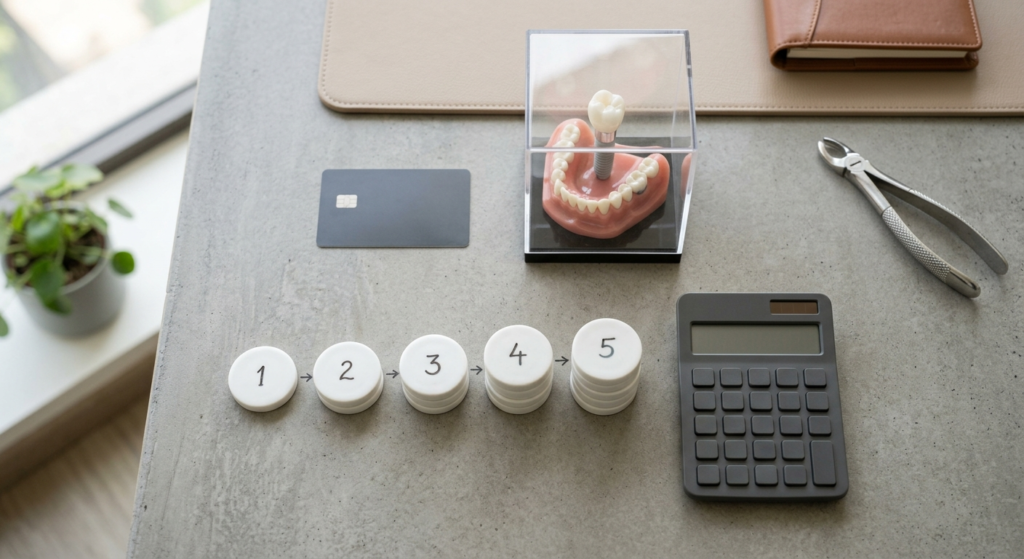
caption-Stacked coins numbered 1 to 5, a credit card, calculator, and dental model illustrating flexible EMI installment payment plans.

Most of our aligner patients pay through EMI, and we keep it simple: 50 to 60 percent of the treatment cost upfront, and the balance in monthly installments, with no-cost EMI available. If a single payment has been holding you back, it does not have to.

Why the Cheapest Quote Is the Wrong Filter

The lowest prices in the aligner market belong to services that skip examination, X-rays and in-person monitoring. Teeth move through living bone, and treatment without diagnosis can cost far more to correct than it saved. Compare what is included, not just the number: who examines you, who monitors progress, what happens if a tooth stops tracking, and whether reviews and refinements are covered. We have written an honest comparison here: in-clinic versus at-home aligners.

Get Your Exact Number

Digital scan and assessment that fixes the exact aligner price
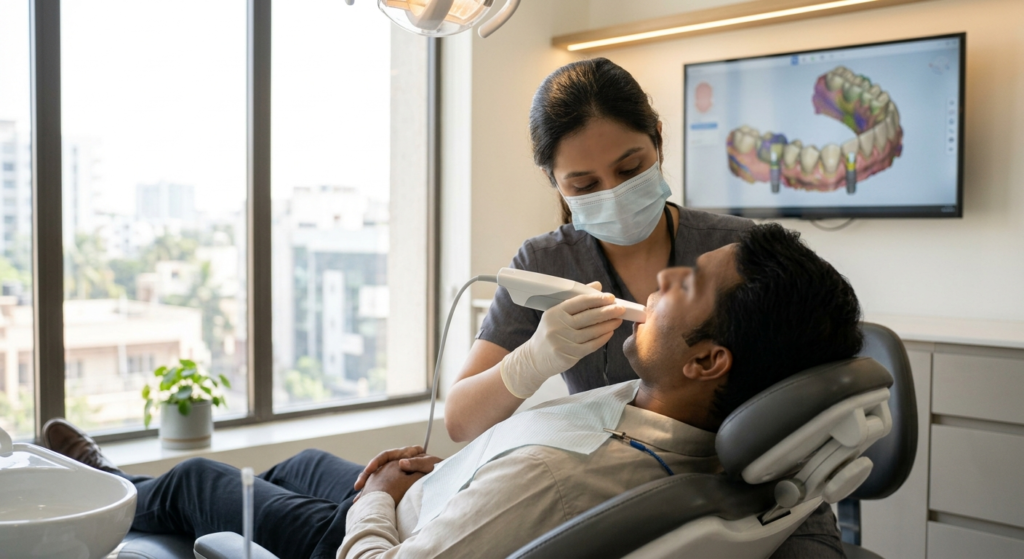
A dentist using an intraoral scanner to perform a 3D digital scan of a patient’s teeth for clear aligners.

One visit answers everything: a clinical exam, X-rays, a TRIOS 3 digital scan, a simulation video of your result, the exact number of trays, the total price and the EMI plan. The Rs 3,500 to 4,000 evaluation fee is adjusted against your treatment if you go ahead.

Call 097390 62002 – Dr Rupali’s Dental Care and Implant Centre, Kasturi Nagar, Bengaluru. Aligner treatment is planned and personally supervised by Dr. Rupali Panpate, an Invisalign approved dentist with more than 110 aligner cases over 12 years. You can also read about aligner treatment at our clinic.

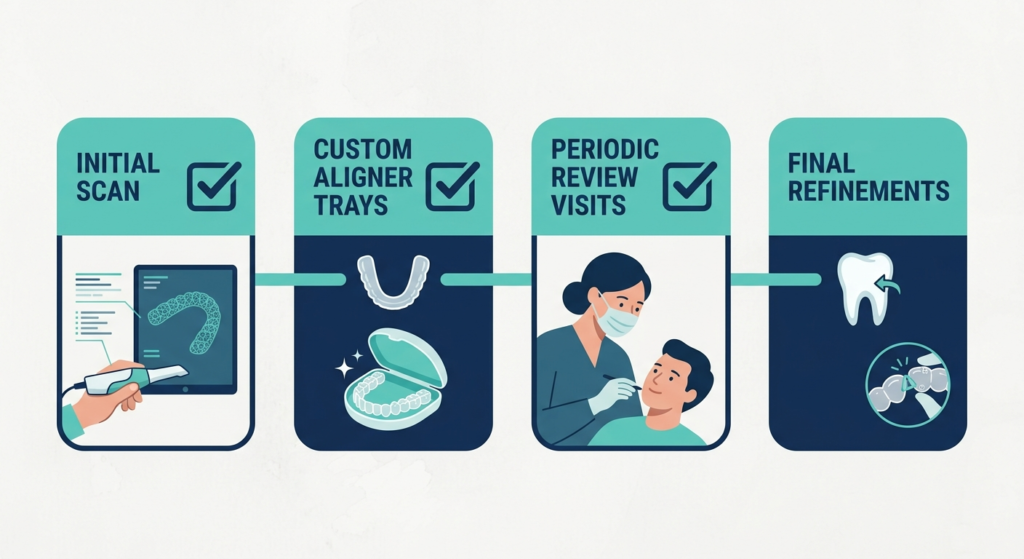
What is included in aligner treatment cost at the clinic
Infographic illustrating the four key steps in clear aligner treatment: initial scan, custom aligner trays, periodic review visits, and final refinements.

Frequently Asked Questions About Aligner Costs

How much do clear aligners cost in Kasturi Nagar?

At our Kasturi Nagar clinic, DentCare aligner treatment generally ranges from Rs 30,000 to Rs 1.5 lakh or more depending on the case, and Invisalign is priced after assessment. The scan that fixes your exact price costs Rs 3,500 to 4,000 and is adjusted against treatment.

Why is the price range so wide?

Because the number of trays is the price. A minor correction may need a handful of trays; a complex case may need twenty or more, and the system you choose also matters.

Is EMI available for aligners?

Yes. Typically 50 to 60 percent upfront and the balance in monthly installments, with no-cost EMI available.

Is the consultation fee extra?

The scan and evaluation costs Rs 3,500 to 4,000, and the full amount is adjusted against your treatment cost if you proceed. Review visits during treatment are free.

Are aligners more expensive than braces?

Usually yes for comparable cases – aligners sit in the premium bracket, while braces are often cheaper for smaller corrections. The full comparison: Invisalign versus braces in Bengaluru.