Skip to the content

Key Takeaways
- Retainers are the final and non-negotiable stage of any orthodontic treatment.
- Without them, teeth naturally drift back toward their old positions, a process called relapse.
- There are two main types: removable retainers and fixed bonded retainers.
- Wear is heaviest in the first months, then usually eases to long-term night-time wear.
- The clinic’s refinement policy is separate from retention and does not cover relapse from skipping retainers.
- Dr. Rupali Panpate reviews your retainer plan at the end of every case.
Finishing your aligners feels like the end of the story, but one more chapter decides whether your new smile lasts. Retainers are the final and non-negotiable stage of any orthodontic treatment, and at our clinic they are treated as essential rather than optional. Dr. Rupali Panpate reviews the retainer plan at the end of every case and explains exactly how to wear yours.
Why teeth try to move back
Teeth are not set rigidly in the jaw. They sit in bone, held by fibres that stretch and reshape as the teeth move during treatment. When aligners finish their work, those fibres and the bone around each tooth are still remodelling, and for a while the teeth are inclined to return to their old position.
This natural tendency is called relapse, and it is the single most common reason people end up disappointed years after otherwise successful treatment. Retainers exist precisely to hold the teeth steady through that settling period and well beyond it. If you are still weighing up treatment, our guide to how clear aligners work explains the movement side of the story.
The types of retainers
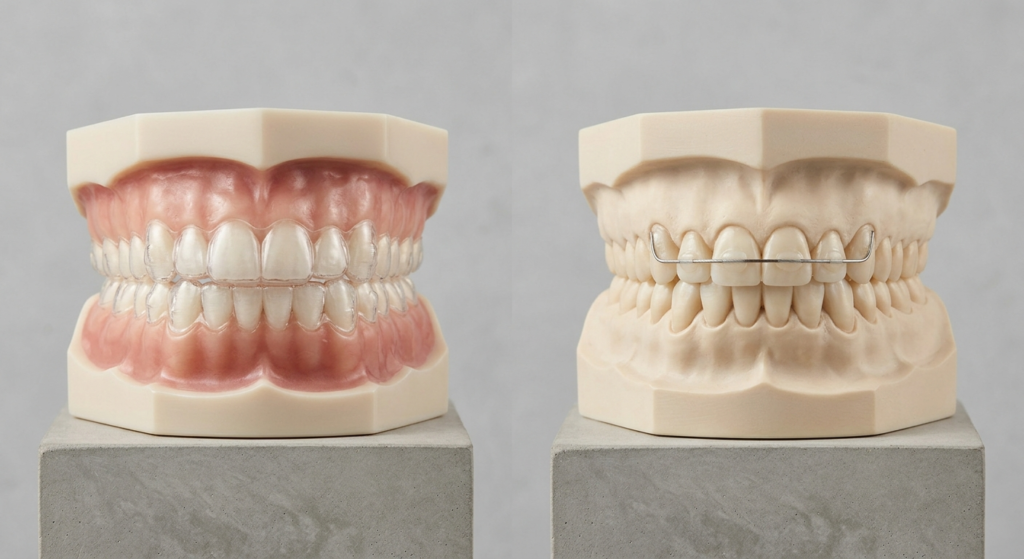
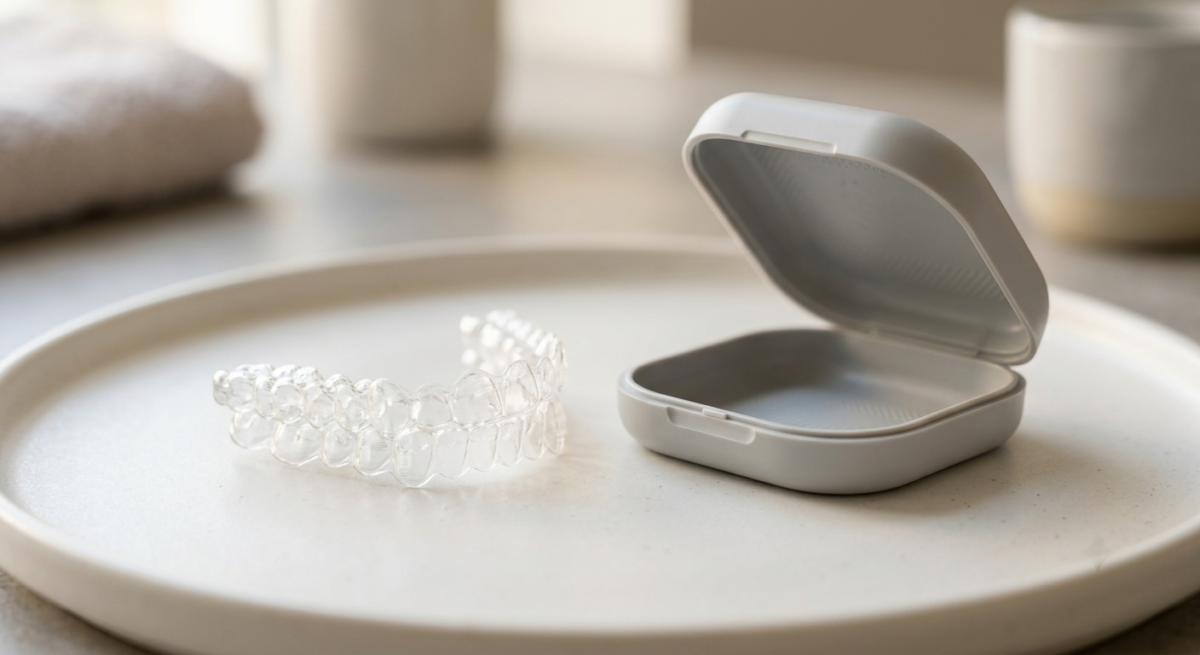
There are two broad kinds. Removable retainers are clear trays, or a wire-and-plate design, that you take out to eat and clean, then wear as instructed. Fixed retainers are a thin wire bonded quietly behind the front teeth, working around the clock without you having to think about them.
Each has its place, and the right choice depends on your case, your bite, and how much support your teeth need to stay put. Dr. Rupali Panpate, an Invisalign approved doctor who plans every case personally, recommends the type that best protects your particular result. Many patients end up with a combination of both.
How long you wear retainers

The honest answer is longer than most people expect. Wear is usually heaviest in the first months after treatment, when relapse pressure is greatest, and then eases to night-time wear that continues in the long term.
Many dentists worldwide now regard some level of night-time retention as effectively lifelong, simply because the tendency to drift never fully disappears. Your own schedule is set by your dentist, based on your case. Following it is the whole point: a retainer worn as directed is what keeps your teeth where they belong.
What happens if you stop
This is where the clinic is direct with patients rather than reassuring. If you stop wearing your retainer against your dentist’s guidance, the teeth can move again, and the orthodontic result can be lost.
When that happens, the team who did the work cannot be held responsible, because retention is the patient’s part of a shared effort. The trays do the moving, and the retainer keeps it. Skipping retention is the most common way a good result quietly unravels, and it is entirely avoidable.
Refinements are a different thing
It is worth clearing up a common confusion. Retention is not the same as refinement. Sometimes, even with good cooperation, a tooth needs a little extra fine-tuning to reach the planned position, and the clinic handles these under its refinement policy, at no or minimal cost within the first year after treatment.
That policy is not a promise against neglecting your retainers, and it does not cover relapse caused by not wearing them. It simply reflects that the goal is your final result, and small adjustments to reach it are part of the service you signed up for.
Talk to us about retention in Kasturi Nagar
Whether you are about to finish aligner treatment or you are worried that teeth from an older treatment have already shifted, retention can be planned or restarted as part of aligner treatment at our clinic. The retainer options that suit you, and their cost, are discussed as part of your plan so there are no surprises.
Call 097390 62002 to speak to Dr Rupali’s Dental Care and Implant Centre, Kasturi Nagar, Bengaluru. If you are still deciding on treatment itself, our guide to the clear aligner journey walks through what to expect from start to finish.
Frequently Asked Questions
How long do I need to wear my retainers?
Wear is heaviest in the first months after treatment, then usually eases to night-time wear that continues in the long term. Because teeth always tend to drift, many patients keep some night-time retention indefinitely, and your dentist sets the exact schedule for your case.
Are retainers included in the treatment cost?
The retainer options that suit your case, along with their cost, are discussed as part of your treatment plan at the assessment. That way you know what is included and what to expect before you begin, with no surprises once your aligners are complete.
What should I do if I lose or break a retainer?
Contact the clinic as soon as you can so a replacement can be arranged quickly. The sooner a new retainer is fitted, the less chance your teeth have to drift in the meantime, which protects the result you have already achieved through treatment.
Can my teeth still move years after treatment?
Yes. The natural tendency for teeth to shift never fully goes away, which is why long-term night-time retention is recommended. Consistent retainer wear, even years later, is what keeps your result stable and prevents a slow return of the old position.